
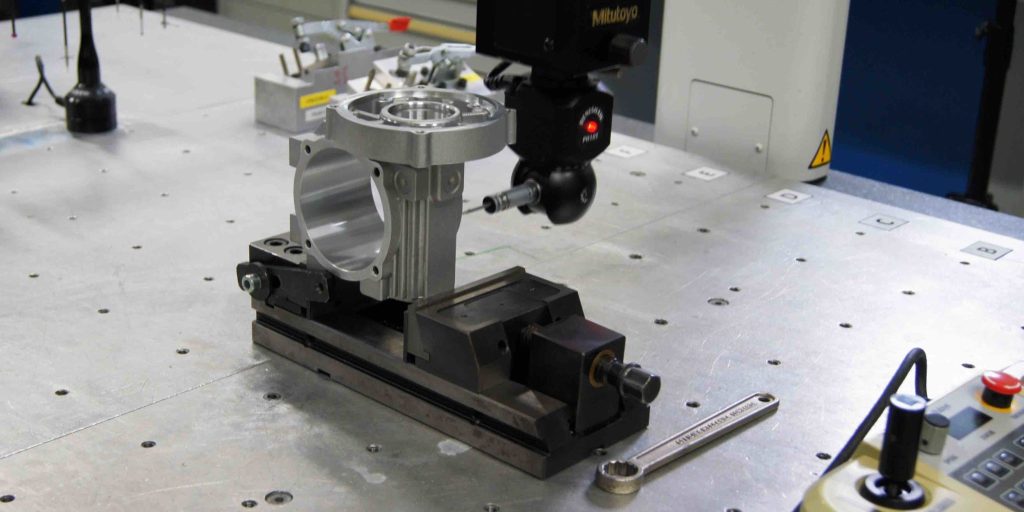
Die casting is a cornerstone of modern manufacturing, a high-speed and highly efficient process used to create thousands, or even millions, of parts from non-ferrous metals.
At its core, it’s a metal-forming process that involves forcing molten metal under immense pressure into a reusable steel mold, known as a die. This method is the go-to choice for producing complex, intricate parts with exceptional precision and a superior surface finish.
What is Die Casting?
Die casting is a metal casting process characterized by its use of high pressure to inject molten metal into a permanent die cavity. Die casting uses a new mold for each part; its reusable steel dies allow for rapid, repeatable production cycles. This speed, combined with the ability to achieve tight dimensional tolerances, makes die casting incredibly cost-effective for large-volume production runs.
The process is highly sought after by industries like automotive, electronics, and consumer goods because it can create parts with complex geometries, thin walls, and a smooth surface finish that often requires minimal or no post-machining. This efficiency in both production and finishing leads to significant cost savings.
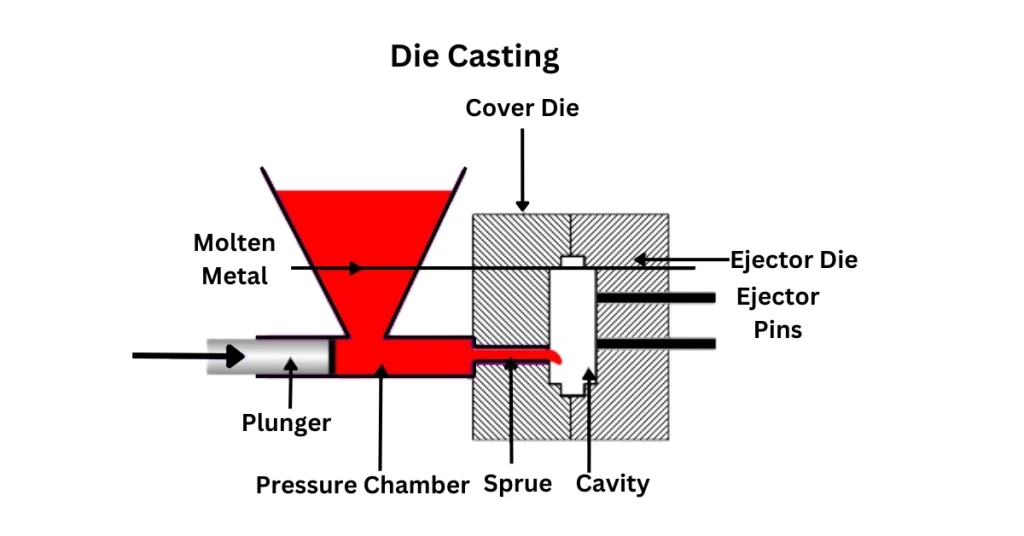
The Die Casting Process
The die casting process is a precise, cyclical operation. While the core principle remains the same, die casting can be categorized by the pressure used to fill the mold and the type of machinery involved. This leads to four main methods: Hot-Chamber, Cold-Chamber, High-Pressure, and Low-Pressure die casting, as well as the more traditional gravity die casting.
Here are the fundamental steps involved in a typical die casting cycle:
- Clamping the die
- Injecting molten metal
- Solidifying the part
- Opening the die
- Ejecting the casting
Hot-Chamber Die Casting
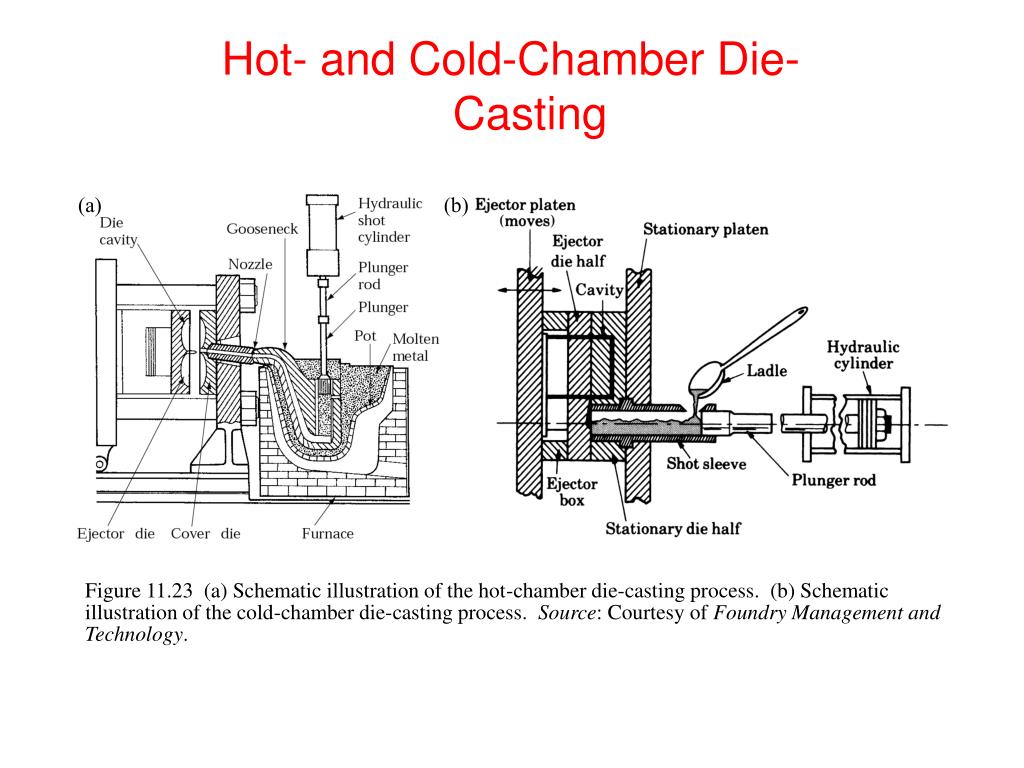
Often called the “gooseneck” process, hot-chamber die casting is primarily used for alloys with low melting points, such as zinc, tin, and lead. The melting pot is integrated into the machine, which keeps the metal molten and ready for injection.
This continuous submersion makes the process very rapid and efficient. The hydraulic plunger forces molten metal from the “gooseneck” into the die cavity, and the machine is immediately ready for the next cycle after the part is ejected.
Cold-Chamber Die Casting
This method is ideal for high melting point alloys like aluminum, brass, and copper. Because these metals would degrade the pumping system if it were submerged, a separate melting furnace is used. A specific amount of molten metal is ladled from the external furnace into a “cold” shot chamber. A hydraulic plunger then pushes the metal into the die at high pressure. This two-step process is slower than hot-chamber casting but provides the necessary versatility for a wider range of materials.
High-Pressure Die Casting (HPDC)
High-Pressure Die Casting is the most common form of die casting. This method, which includes both the hot-chamber and cold-chamber processes, uses immense forces from 1,500 to 25,000 PSI to rapidly inject molten metal into a die cavity.
The high pressure and speed ensure the metal fills even the most intricate, thin-walled sections of the die before it can solidify. HPDC is renowned for its ability to produce highly complex parts with excellent surface quality and tight dimensional tolerances, often eliminating the need for further machining.
Low-Pressure Die Casting (LPDC)
Low-Pressure Die Casting, in contrast, uses a much lower pressure between 3 and 15 PSI to fill the die cavity. In this process, the die is placed above a sealed furnace containing molten metal. A tube, known as a riser tube, extends from the bottom of the die into the molten metal.
The furnace is pressurized with an inert gas, which forces the molten metal to rise up the tube and fill the die from the bottom up. This gradual, non-turbulent filling method is highly effective at reducing porosity (air pockets) in the final part.
LPDC is typically used for producing larger, thicker-walled parts that require superior structural integrity and a high-quality internal structure, such as aluminum wheels and complex aerospace components.
Gravity Die Casting
Also known as permanent mold casting, Gravity Die Casting is a method that relies on gravity alone to fill the mold. Molten metal is manually poured into the die, and the part solidifies as it cools. This process is slower than pressure-based methods, but it results in a denser, higher-quality casting with excellent mechanical properties.
Because of its slower filling rate and reliance on gravity, it’s often used for producing parts with thicker walls and for applications where structural integrity is a critical requirement, such as some automotive engine components.
Get an instant quote from Xmake by uploading your design file today, and enjoy fast, reliable delivery with our expert manufacturing services.
Start a QuoteDie Casting Materials
Selecting the right alloy is critical for a successful die casting project. Each material offers a unique set of properties, impacting the final part’s strength, weight, and application. Here is a breakdown of the most common die casting alloys.
Aluminum
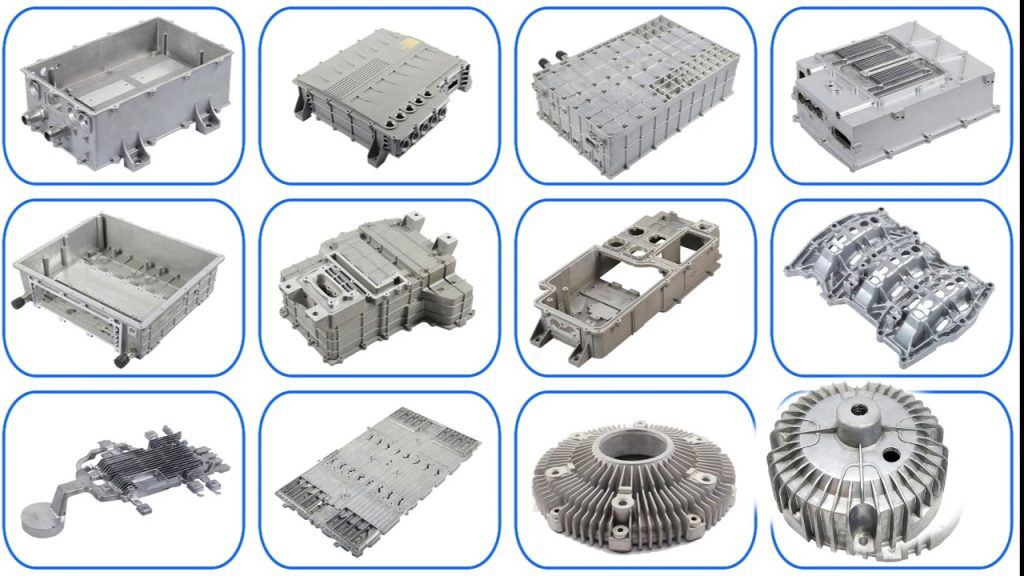
Aluminum die cast alloys are prized for their combination of low density, high rigidity, and outstanding thermal conductivity. Their excellent strength-to-weight ratio allows the manufacture of structural components without excessive bulk, making them vital in lightweight design strategies for vehicles and machinery. With precise casting characteristics and corrosion resistance, aluminum die cast parts appear in engine blocks, transmission housings, and high-performance electronics where consistent dimensional accuracy and heat dissipation are critical.
Zinc
Zinc die casting alloys distinguish themselves by exceptional fluidity and low melting temperatures, enabling faster cycle times and extended tool life. The material exhibits superior strength, hardness, and surface finish, making it ideal for producing small, intricate parts with tight tolerances. Engineers often select zinc for hardware, gear assemblies, connectors, and consumer electronics because it replicates fine features efficiently, supports high-volume production, and offers excellent plating or coating performance.
Magnesium
Among structural die casting materials, magnesium boasts the highest strength-to-weight ratio and the lowest density, which directly contributes to weight reduction in demanding applications. Magnesium die cast components excel in automotive and aerospace sectors, particularly in dashboard frames, seat structures, and housings requiring stiffness with minimal mass. Beyond its lightness, magnesium's damping capacity and electromagnetic shielding characteristics make it suitable for portable devices such as cameras and laptops.
Brass & Copper
Brass and copper alloys used in die casting deliver high tensile strength, durability, and outstanding resistance to corrosion and wear. They also provide superior thermal and electrical conductivity, which is essential for electrical connectors, switchgear elements, and plumbing fittings. Copper-based die cast parts maintain structural integrity under thermal cycling and mechanical stress, offering dependable performance in high-load or high-temperature conditions common in industrial and power applications.
Advantages and Limitations of Die Casting
Die casting offers a powerful set of benefits that make it a top choice for a wide range of applications, but it’s not without its drawbacks.
Advantages:
- High Production Speed: The short cycle times allow for the rapid production of a high volume of parts, making it extremely cost-effective for mass production.
- Dimensional Accuracy & Stability: Parts are produced with excellent dimensional accuracy, often eliminating the need for further machining.
- Complex Part Geometries: The process can create very intricate, complex shapes with thin walls, which is difficult to achieve with other methods.
- Superior Surface Finish: Die cast parts have a smooth, aesthetically pleasing surface that can be easily painted, plated, or finished.
Limitations:
- High Initial Tooling Cost: The cost of designing and manufacturing the steel dies is high, making die casting less economical for low-volume production runs.
- Material Limitations: The process is generally limited to non-ferrous alloys with lower melting points.
- Porosity: Improper process control can lead to small air pockets (porosity) within the casting, which can weaken the part.
Design Considerations for Die Cast Parts
To ensure a successful project, paying close attention to design principles is crucial. Here’s what every designer should know:
- Draft Angles: A slight taper on walls perpendicular to the parting line is essential for easy part ejection from the die. A typical draft angle is 1° to 3° per side, though it can be smaller for some materials.
- Wall Thickness: Maintaining a uniform wall thickness is a golden rule. Variations can lead to uneven cooling, which may cause warping, cracking, or porosity. For aluminum, a common range is 1.5 mm to 4.0 mm.
- Fillets and Radii: Always incorporate generous radii at internal and external corners. Sharp corners can cause stress concentration points and increase the risk of cracking in the die.
- Ribs and Gussets: Use ribs to strengthen walls and prevent them from warping without making the entire part thicker. Gussets, which are triangular supports, are ideal for reinforcing corners and helping to distribute stress. They are a great way to add structural integrity while saving on material costs and maintaining thin walls.
- Parting Line Location: The parting line is where the two halves of the die meet. Its location affects die complexity, cost, and the appearance of the finished part. Placing the parting line in an aesthetically acceptable or easily machinable location is a critical design decision. A well-placed parting line minimizes the amount of “flash,” or excess material, that needs to be trimmed from the finished part.
Applications of Die Casting Parts
Automotive
The automotive sector remains the largest user of die-cast components, benefiting from their precision, light weight, and ability to withstand thermal and mechanical stresses. With the shift toward electric mobility, die casting also plays a vital role in battery housings and cooling system components where high thermal conductivity and dimensional consistency are essential.
Aerospace
In aerospace manufacturing, die casting supports both performance and efficiency goals by producing lightweight components with complex geometries and minimal machining. Typical aerospace die cast parts include gearbox housings, seat structures, and instrument enclosures. Their reliability under fluctuating loads and high temperatures ensures long-term operational stability in demanding flight environments.
Electronics
The electronics industry relies on die casting for components that require both electrical conductivity and protection from environmental factors. Zinc and aluminum die cast parts, such as heat sinks, connector housings, and enclosures, provide excellent shielding against electromagnetic interference while dissipating heat efficiently. Their precise surface finish and dimensional accuracy also make them compatible with automated assembly and high-volume production lines.
Consumer Goods
Die casting enables the production of aesthetically refined yet durable components used in various consumer goods and hardware products. Zinc and aluminum alloys are especially popular for handles, fittings, housings, and decorative elements because they combine good mechanical strength with smooth surface finishes. Their ability to achieve fine detail makes them suitable for high-quality kitchenware, power tools, and appliances where both form and function are valued.
Industrial and Electrical Equipment
In industrial machinery and electrical systems, die casting contributes to robust, conductive, and reliable components. Brass and copper die cast parts are frequently used in valves, switches, and connectors that demand high corrosion resistance and consistent electrical performance. The process ensures tight dimensional control, enabling efficient assembly and long service life even in harsh or high-load operational environments.
Conclusion
This comprehensive guide has covered the fundamentals of die casting. As a highly efficient manufacturing method, die casting is ideal for producing high-quality metal parts at scale. Xmake provides top-tier die casting and CNC machining services, offering a no minimum order quantity policy to support projects of any size.
Frequently Asked Questions
What is the difference between die casting and injection molding?
While both use a mold to shape a material, die casting is used for molten metal, while injection molding is used for plastics. The temperatures and pressures involved in die casting are significantly higher.
What is the purpose of die cast?
The purpose of die casting is to produce a high volume of complex, high-precision metal parts with a consistent surface finish and tight dimensional tolerances, making it a highly efficient and cost-effective method for mass production.
Why is it called diecast?
The name “die casting” is derived from the “die,” which is the permanent steel mold used to form the part. The term “casting” refers to the process of shaping a liquid material by pouring or forcing it into a mold.
What is die cast metal?
“Die cast metal” is a term that refers to the specific non-ferrous alloys used in the die casting process. The most common of these include alloys of aluminum, zinc, magnesium, and copper.
What is die cast aluminum?
Die cast aluminum refers to a specific type of lightweight aluminum alloy that has been designed for excellent castability and is processed using a die casting machine. It is widely used in automotive and electronic industries due to its high strength-to-weight ratio and good thermal properties.