
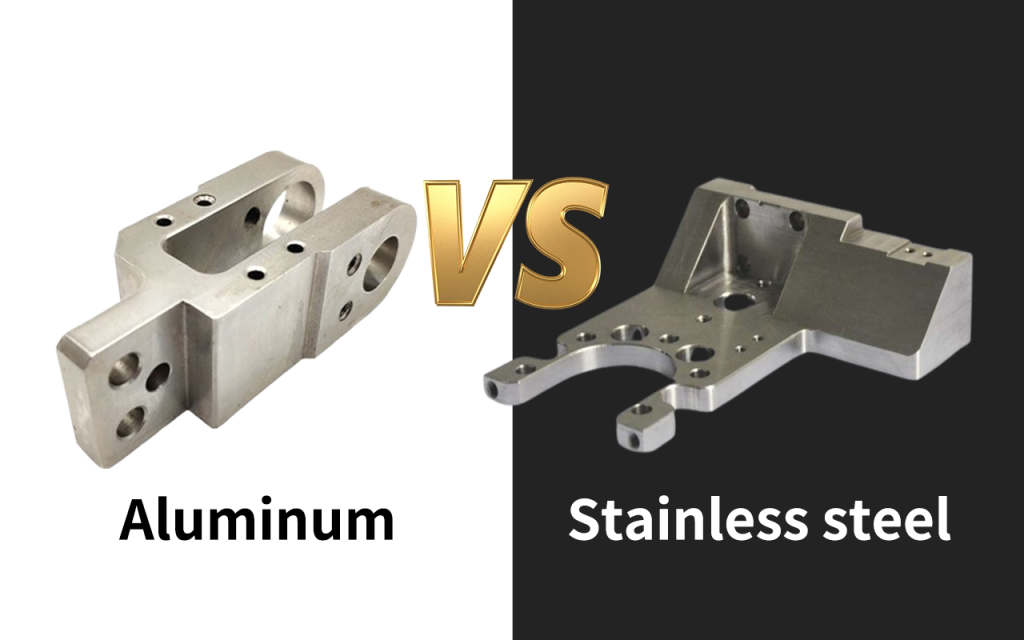
Introduction: Aluminum is three times lighter than stainless steel, 3–5 times faster to process, and 30–50% cheaper per piece. Stainless steel, on the other hand, has higher absolute strength, better corrosion resistance, but it requires longer processing times and results in higher tool wear.The choice between aluminum and stainless steel typically depends on the application scenario of the project. This article compares these materials from multiple perspectives to help you choose the right one.
What is Aluminum Alloy?
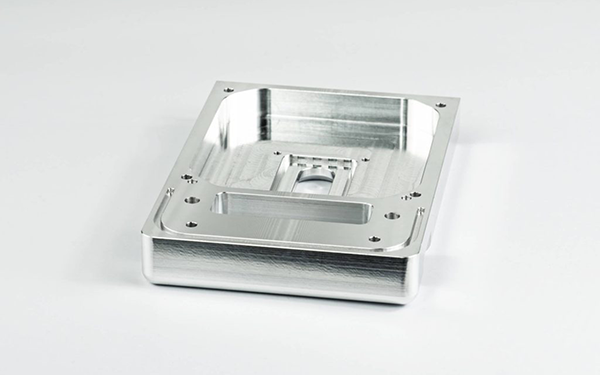
Aluminum is a lightweight metal with a density of only 2.70 g/cm³. This means that for the same volume of parts, aluminum is almost three times lighter than stainless steel. Many people’s first reaction is “lighter = less strong.” However, in many structural applications, aluminum’s strength-to-weight ratio (specific strength) is often superior to steel. In other words, lighter parts can be achieved while maintaining structural strength.
Regarding corrosion resistance, aluminum naturally forms an oxide film in the air, providing sufficient corrosion resistance in most indoor and low-humidity environments. Anodizing can further strengthen this protective layer, offering low cost and reliable results.
In terms of processing, aluminum is easy to machine and shape, enabling high machining precision and excellent surface quality.
In summary, lightness, ease of processing, and relatively low cost are the three core characteristics of aluminum.
What is Stainless Steel?
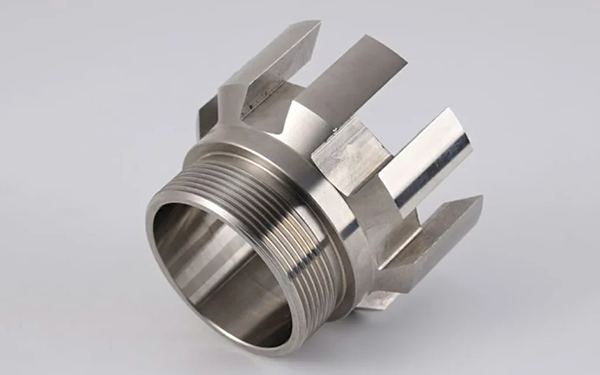
Stainless steel is an alloy steel with an iron base, typically containing no less than 10.5% chromium. It is this chromium oxide film that gives it its corrosion resistance in humid, acidic, alkaline, and marine environments.
In terms of mechanical properties, stainless steel can withstand higher structural loads and maintain good toughness under impact conditions. Simultaneously, its mechanical strength and oxidation resistance remain stable in high-temperature environments. However, these advantages come at a cost: stainless steel is far less machinable than aluminum—slower cutting speeds, faster tool wear, and higher labor costs.
In summary, good corrosion resistance, high-temperature resistance, and difficulty in machining are the three core characteristics of stainless steel.
Differences between aluminum alloys and stainless steel:
Aluminum alloys and stainless steel differ significantly in weight, strength, corrosion resistance, and processing performance. This chapter will explain in detail the differences between the two in different dimensions.
Weight and Density
Aluminum has a density of approximately 2.7 g/cm³, while stainless steel has a density of 7.7–8.0 g/cm³, nearly three times that of stainless steel. This is significant; for the same support structure, using aluminum reduces weight by two-thirds.
Strength and Load Capacity
Many people assume “stainless steel is stronger.” That’s true; stainless steel does have higher absolute tensile strength. For high loads, impact loads, and pressure vessels, stainless steel is indeed more reliable.
However, specific strength is another matter. 7075 aluminum alloy has nearly twice the strength-to-weight ratio of stainless steel. In other words, when weight is a design constraint, you can use a lighter material to bear a comparable structural load. Therefore, when it comes to robotic structural components, motion equipment, and high-dynamic mechanical structures, aluminum alloys often represent a more efficient engineering choice.
Corrosion Resistance
Stainless steel offers superior corrosion resistance, performing exceptionally well in humid, acidic, alkaline, and marine environments. While aluminum alloys also form a natural oxide layer for protection, they cannot withstand strong acids, strong alkalis, or high-salt environments.
High-Temperature Resistance
Stainless steel maintains its strength and exhibits strong oxidation resistance at elevated temperatures. Aluminum alloys behave differently—their strength degrades rapidly as temperatures rise. Therefore, stainless steel is typically chosen for structural components subjected to prolonged high temperatures.
Machinability
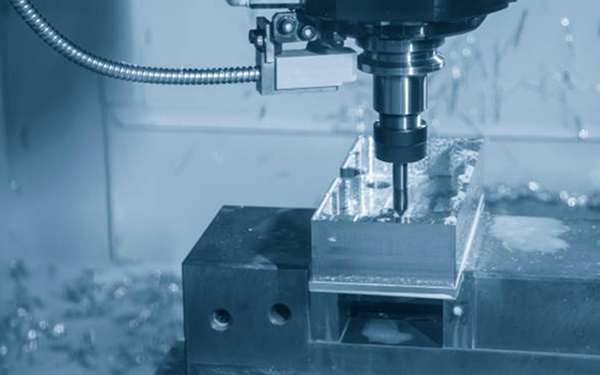
Aluminum is softer with lower cutting resistance, allowing CNC machining to achieve higher cutting speeds, reduced tool wear, and greater efficiency. Stainless steel, conversely, is prone to work hardening, resulting in rapid tool wear and limited cutting speeds.
To provide a more intuitive comparison of the performance differences between the two materials, we have compiled the following comparison table:
| Performance Dimension | Aluminum Alloy (6061-T6) | Stainless Steel (304) | Conclusion |
|---|---|---|---|
|
Density |
2.70 g/cm³ |
8.00 g/cm³ |
Aluminum is 3 times lighter |
|
Tensile Strength |
310 MPa |
515 MPa |
Stainless steel is 66% higher |
|
Strength-to-weight ratio |
115 kN·m/kg |
64 kN·m/kg |
Aluminum is nearly twice as high |
|
Hardness (Brinell) |
95 HB |
123 HB |
Stainless steel is harder |
|
Machinability rating |
90% |
45% |
Aluminum has twice the cutting efficiency |
|
Corrosion resistance |
Good (Excellent after anodizing) |
Excellent |
Stainless steel stronger |
|
Maximum operating temperature |
150°C |
870°C |
Stainless steel more heat-resistant |
|
Thermal conductivity |
167 W/m·K |
16 W/m·K |
Aluminum dissipates heat 10 times better |
|
Raw material cost |
$2–3/kg |
$3–5/kg |
Aluminum cheaper |
When to Choose Aluminum
Prioritize aluminum if any of these conditions apply:
- l Indoor or low-humidity environments with no chemical exposure
- l Part weight directly impacts system performance (aerospace, robotics, drones)
- l High-volume production, tight deadlines, cost-sensitive projects
- l Structural loads within the strength range of 6061-T6 (tensile strength 310 MPa)
When to Choose Stainless Steel
Stainless steel is essential when any of the following conditions apply:
- l Direct contact with chloride ions, acidic/alkaline media, or seawater (select 316)
- l Food or medical devices requiring sanitary surface standards (select 304/316)
- l Long-term outdoor exposure or high-humidity environments
- l Operating temperatures exceeding 150°C
CNC Machining Costs for Aluminum and Stainless Steel
From a CNC machining perspective, material costs are only a part of the total expense, and the price difference between aluminum and stainless steel raw materials is actually not particularly significant. What truly impacts manufacturing costs are typically machining time, tool wear, and machine tool operating hours.
In most cases, CNC machining costs for aluminum alloys are significantly lower than those for stainless steel.
The primary reason lies in differences in machinability. Aluminum offers lower cutting resistance, allowing for higher cutting speeds and feed rates, resulting in greater machining efficiency.
Conversely, stainless steel possesses higher hardness and is prone to work hardening, leading to faster tool wear. It typically requires lower cutting parameters and more stable machining strategies.
Consequently, for parts with identical structures, stainless steel often demands substantially longer machining times than aluminum.
Common Grade Selection for Aluminum Alloy and Stainless Steel
Choosing the right material but the wrong grade will still increase costs and delivery times. Below are the most common grade applications.
Aluminum Alloy Grades
| Grade | Tensile Strength | Primary Applications |
|---|---|---|
|
6061-T6 . |
310 MPa |
Preferred for 90% of scenarios—structural components, brackets, enclosures |
|
7075-T6 |
570 MPa |
High-load aerospace parts requiring near-steel strength |
|
2024-T3 |
483 MPa |
Aerospace components demanding high fatigue resistance |
6061-T6 serves as the standard starting point for CNC machining—offering optimal machinability, lowest cost, and consistent availability. Unless loads explicitly exceed specifications, there’s no need to upgrade to 7075. Additionally, we offer grades like 2017, 5052, and 6063 to cover a broader range of structural and forming requirements. Click to view the complete list of aluminum alloy grades and specifications.
Stainless steel grades
| Grade | Tensile Strength | Primary Applications | Applications |
|---|---|---|---|
|
304 . |
âââ |
Good |
General structural components, food contact, indoor equipment |
|
316 |
ââ |
Excellent |
Marine, chemical, medical environments |
|
301 |
ââââ |
Average |
Spring sheets, clips, and other high-elasticity thin-walled parts |
We offer a wide range of stainless steel grades. Click to view the full list of stainless steel grades and specifications.
Conclusion
Aluminum serves as the primary material for most CNC parts. It offers machining speeds 3–5 times faster, weighs 3 times less, and reduces total costs by 30–50%. For indoor and mildly corrosive environments, anodized aluminum is entirely sufficient.
Stainless steel is typically preferred for applications involving corrosive environments, high temperatures, or food- and medical-grade hygiene requirements. In other cases, it may be considered over-specification, and the material should be selected based on the actual performance needs of the part.
If you’re selecting materials for your next CNC project, our engineering team can provide material recommendations. We also offer a wide range of machinable materials with tolerances as tight as ±0.005mm and lead times of 3–7 business days.
Learn about our CNC machining services or view machinable material specifications directly.
→ Submit your drawings and receive a machining quote within 4 hours.
Frequently Asked Questions
Is aluminum stronger than stainless steel?
In terms of tensile strength alone, stainless steel is higher (304 at 515 MPa vs. 6061 at 310 MPa). However, aluminum’s strength-to-weight ratio is nearly twice that of stainless steel. For weight-constrained structural components, aluminum offers higher actual load-bearing efficiency.
Which has lower processing costs, aluminum or stainless steel?
Aluminum has lower processing costs. For parts of equal complexity, aluminum machining requires approximately 1/3–1/2 the labor hours of stainless steel and incurs lower tool wear. Overall processing costs are typically 30–50% lower.
When is stainless steel's higher processing cost justified?
Stainless steel is essential when operating conditions involve chloride ion corrosion, food/medical hygiene requirements, long-term outdoor exposure, or temperatures exceeding 150°C. The cost premium is justified by engineering necessity.
Which aluminum alloy grade is most recommended for CNC machining?
6061-T6. It offers optimal machinability, lowest cost, and most stable supply, covering the vast majority of structural component needs. For high-load applications, consider 7075-T6.