
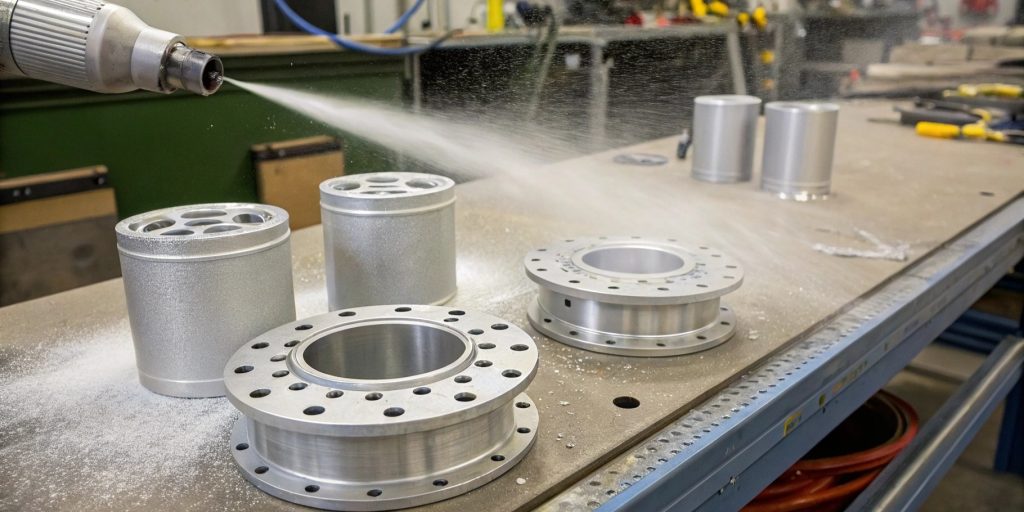
Ever wonder what gives a premium metal product, like the body of a high-end camera or the casing of a medical device, that smooth, uniform, almost velvety matte finish? It’s not magic, and it’s not a secret. It’s often a process called bead blasting, and it's one of the most popular and effective surface finishes in the manufacturing world.
If you're a product designer, engineer, or simply curious about how things are made, this guide will walk you through everything you need to know about this essential finishing process.
What is Bead Blasting?
Bead blasting is a specialized form of abrasive blasting that propels a stream of fine, spherical media, typically glass beads, at high pressure onto a part’s surface. The primary goal is to create a uniform, smooth, and aesthetically pleasing matte or satin finish without altering dimensional tolerances. Unlike more aggressive forms of blasting that remove significant material, bead blasting is designed for surface modification rather than abrasion.
When the beads hit the surface, they “peen” it, meaning they create a multitude of minuscule, overlapping dimples. This microscopic texturing scatters light, which is what eliminates shine and gives the part its signature smooth, non-glare matte or satin finish. It’s a fantastic way to clean a part, remove minor tool marks, and give it a high-end, finished appearance.
Choosing the Right Blasting Media
While “bead blasting” often implies the use of glass beads, a variety of media can be used depending on the desired outcome. The type of media, its size (grit), and the pressure used are the three primary variables that an engineer can control to achieve a specific finish.
Glass Beads
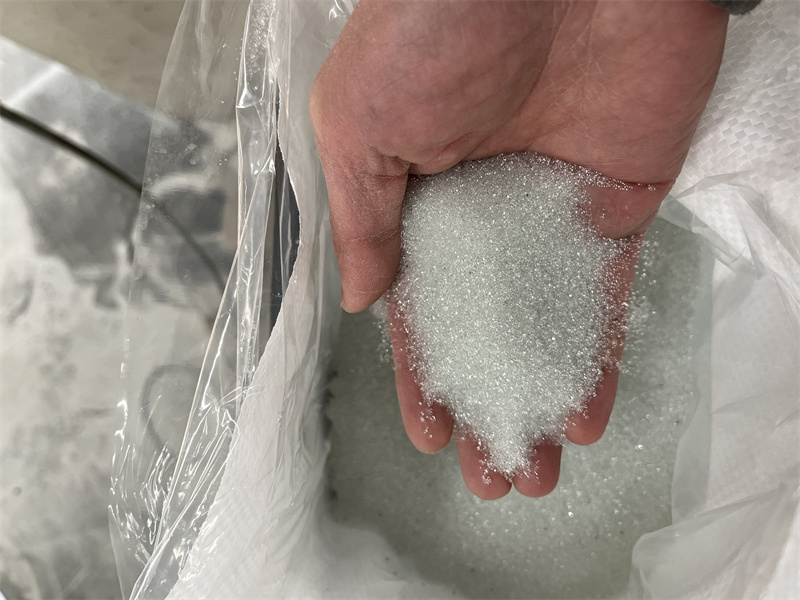
As the name suggests, glass beads are the most common media used for bead blasting. They are tiny, spherical particles of glass that are non-abrasive. When they strike a surface, they create a “peened” finish that is smooth to the touch.
They don’t remove material, which is why they are perfect for maintaining tight dimensional tolerances and creating a beautiful satin or matte appearance. Glass beads are also highly recyclable, making them a cost-effective and environmentally friendly option.
Steel Shot
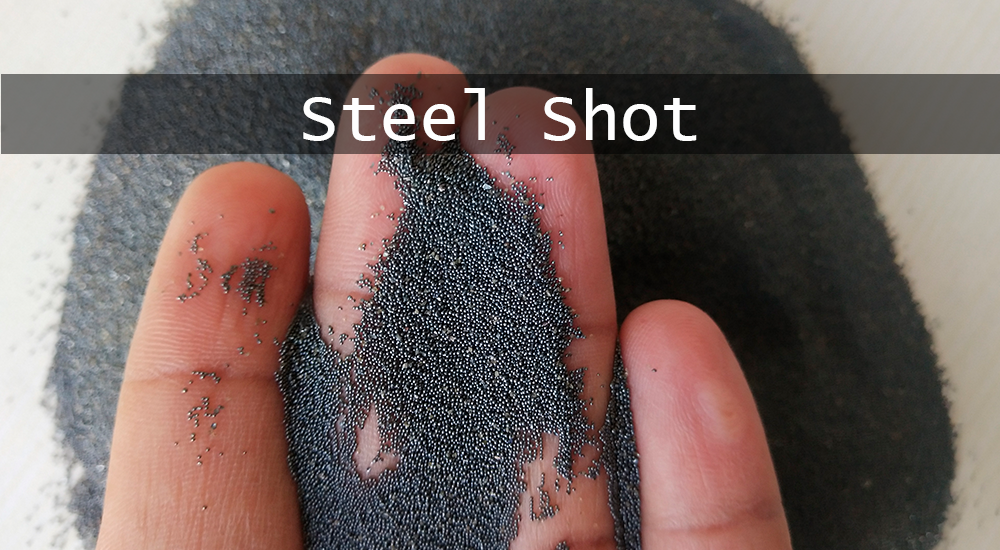
Steel shot consists of spherical steel particles that are significantly heavier and more durable than glass beads. Because of their weight and hardness, they are used for more aggressive “peening” applications, primarily to enhance a part’s fatigue strength.
By compacting the metal’s surface, steel shot creates a residual compressive stress that helps to prevent cracks and fractures. It’s often used on critical aerospace and automotive components where durability is paramount. While it does provide a uniform finish, its primary function is structural rather than purely aesthetic.
Aluminum Oxide

Aluminum oxide is a highly angular and very hard abrasive media. Unlike the spherical beads of glass or steel, aluminum oxide particles have sharp, jagged edges that cut and abrade the surface upon impact. This makes it ideal for more aggressive applications like removing rust, old paint, or scale. It creates a coarse, “etched” surface profile that is excellent for preparing a part for painting or powder coating, as it provides a strong mechanical bond for the new finish.
Plastic Media
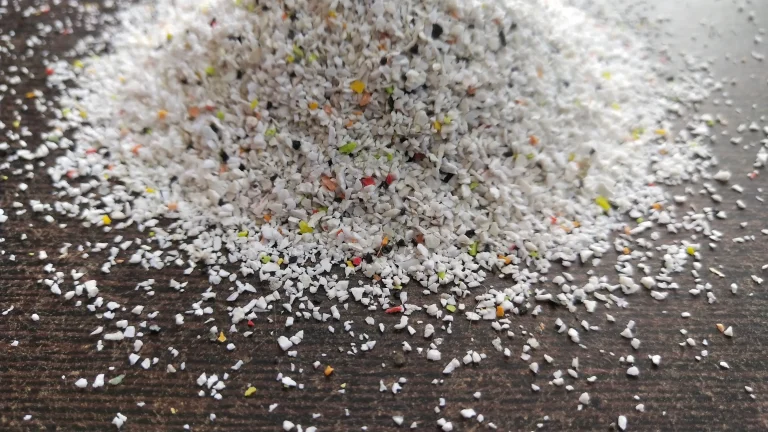
Plastic media is a soft, low-abrasive option that is typically made from various types of crushed polymers. Its key characteristic is that it will not damage a part’s surface or remove any material.Â
This makes it perfect for delicate parts, such as thin-walled aluminum enclosures, where even the slightest material removal could compromise the part’s integrity.Â
Plastic media is also used to clean or strip surfaces without leaving a profile, which is beneficial for antique restoration or cleaning sensitive components.
For most aesthetic finishes, glass beads in the #100 to #200 mesh range are the perfect balance of texture and smoothness. Finer mesh numbers create a more satin-like finish, while coarser numbers will result in a more textured matte.
How Does the Bead Blasting Process Work?
The process itself is straightforward but requires precise control to achieve the desired result. It typically takes place inside a sealed cabinet, similar to a mini sandblasting booth, to safely contain the media.
Step 1. Prepping the Part
Before any blasting begins, the part is carefully prepped. This involves thoroughly cleaning the component to remove any grease, dirt, or debris from previous manufacturing steps like CNC machining. If there are specific areas of the part that need to remain untouched, such as a threaded hole or a highly polished surface, they are masked off with a protective material to ensure only the desired surfaces are blasted.
Step 2. Blasting the Surface
Once the part is prepped and secured, an operator uses a hand-held nozzle to direct a powerful stream of compressed air mixed with the blasting media. They methodically move the nozzle across the part's surface, ensuring every area is exposed to the stream. The operator controls three key variables: the pressure of the air, the distance of the nozzle from the part, and the angle of the nozzle to achieve a consistent finish and to avoid over-peening.
Step 3. The Peening Action
As the millions of tiny, spherical beads strike the surface, the “peening” action begins. Each bead creates a minuscule dimple, and as the operator moves the nozzle, these dimples overlap, creating a uniform, non-directional surface texture. This is the moment the part's glossy, raw appearance is transformed into the desired matte or satin finish.
Step 4. Final Cleaning
After the blasting is complete, the part is removed from the cabinet. The final and most critical step is cleaning. The part is often blasted with pressurized air to remove any loose beads and then moved to an ultrasonic bath or a similar cleaning system to dislodge any media particles that may have become lodged in tight corners or grooves. This ensures the part is completely clean and ready for its next step, whether that’s assembly, anodizing, or delivery.
The key to a successful bead blast is achieving complete, consistent coverage. Any missed spots will stand out as a shiny patch, ruining the uniform finish. This is where the skill of the operator and the quality of the equipment make all the difference.
When to Choose Bead Blasting?
Bead blasting is a versatile process used across numerous industries for both aesthetic and functional purposes. Here are some of its most common applications:
- Aesthetic Finishing: This is its most frequent use. Parts for consumer electronics, cameras, and decorative components are often bead blasted to achieve a beautiful, non-reflective finish that hides minor imperfections from machining.
- Medical Devices: Surgical instruments and medical enclosures are bead blasted to reduce glare in operating rooms. The matte finish also makes the parts more comfortable to handle and less slippery.
- Surface Preparation: A bead blasted surface has a slightly rough texture that is ideal for improving the adhesion of subsequent coatings, such as paint, anodizing, or powder coating.
- Light Deburring: While it can't remove large burrs, bead blasting is excellent for cleaning up minor flashes or smoothing sharp edges left by CNC machining without affecting dimensional tolerances.
- Aerospace: Components for aircraft often require a specific surface texture for functionality, and bead blasting is used to achieve a consistent finish on critical parts.
It's the go-to choice when you need a smooth, uniform finish but cannot afford to remove any material or alter the part’s geometry. For example, a tight-tolerance medical housing would be bead blasted, whereas a rough metal bracket might be sandblasted for heavy material removal.
Pros and Cons of Bead Blasting
Like any manufacturing process, bead blasting has its strengths and weaknesses.
Advantages of Bead Blasting
- Superior Surface Texture: Bead blasting creates a smooth, uniform, and tactile surface finish that looks and feels high-end. This is one of its most common and sought-after benefits.
- Maintains Dimensional Integrity: It is a non-destructive process, meaning the final part dimensions remain exactly as designed, which is crucial for tight-tolerance parts.
- Effective Surface Prep: The process is an excellent way to prepare a surface for subsequent operations like anodizing, painting, or powder coating.
- Eco-Friendly Process: The media, particularly glass beads, can be recycled multiple times, reducing waste and making it a more sustainable option compared to other more disposable media.
- Relatively Quick and Affordable: For most applications, bead blasting is a fast and cost-effective way to get a high-quality finish, especially compared to more complex processes like electropolishing.
Disadvantages of Bead Blasting
- Limited Material Removal: It’s not a solution for removing large amounts of material or fixing significant surface defects.
- Media Imbedding: In parts with very small holes, crevices, or blind features, there is a risk of glass beads getting trapped, requiring a more thorough cleaning process.
- Surface Contamination: If the media or the air supply isn’t clean, there is a small risk of contaminating the part’s surface, which can affect subsequent processes.
Get an instant quote from Xmake by uploading your design file today, and enjoy fast, reliable delivery with our expert manufacturing services.
Start a QuoteBead Blasting vs. Sand Blasting
While both bead blasting and sand blasting fall under the umbrella of abrasive blasting, they are fundamentally different processes with distinct goals. The key difference lies in the media used and the intended effect on the material.Â
Sand blasting, or more accurately, media blasting, uses sharp, angular media like silica sand, aluminum oxide, or steel grit to aggressively cut and abrade a surface. Bead blasting, on the other hand, uses smooth, spherical beads that “peen” the surface without removing significant material.
Here's a breakdown of the key factors to consider when choosing between the two:
| Factor | Bead Blasting | Sand Blasting |
| Media Type | Spherical, non-abrasive (e.g., glass beads, ceramic beads) | Angular, abrasive (e.g., sand, aluminum oxide, steel grit) |
| Primary Purpose | Aesthetic finishing, deburring, light cleaning | Aggressive material removal, etching, rust removal, heavy-duty cleaning |
| Material Removal | Minimal to none | Significant |
| Resulting Finish | Smooth, satin, or matte finish; does not alter the part's geometry | Coarse, dull, and etched finish; can change dimensional tolerances |
| Common Applications | Medical devices, consumer electronics, cosmetic parts | Rust removal, preparing surfaces for paint, heavy-duty cleaning, etching glass |
The choice between bead blasting and sand blasting depends entirely on your project’s objective. If you need to clean a part, remove burrs, or achieve a flawless, aesthetic finish without changing the part’s dimensions, bead blasting is the ideal choice. If you need to remove rust, old paint, or etch a surface, a more aggressive process like sandblasting is a better fit.
Xmake's Surface Finish Service for Your Projects
At Xmake, we consider bead blasting a core part of our finishing toolkit. We work with a wide range of materials, from aluminum and stainless steel to plastics and composites, and we know exactly which media and pressure settings to use to achieve your desired outcome.
For a recent client project, a custom aluminum housing for a ruggedized sensor. This gave the enclosure a durable, non-glare finish that was perfect for an outdoor application, while also smoothing over any minor tool marks from the machining process. Our team then carefully cleaned and inspected each part to ensure it met our strict quality standards before it was shipped.
We don’t just blast parts; we manage the entire process, from design to delivery, ensuring you get a flawless, production-ready component every time.
Conclusion
Bead blasting is an invaluable surface finishing technique that offers a perfect balance of aesthetics and function. Whether you’re aiming for a sleek, modern look or need to prepare a surface for a durable coating, it’s a versatile process that delivers consistent, high-quality results.
At Xmake, we use this technique daily to transform raw CNC-machined parts into aesthetically stunning, ready-to-use components. Ready to see how bead blasting can transform your next project? Get in touch with the Xmake team today to discuss your design and finishing needs. We’re here to help you bring your ideas to life.
Frequently Asked Questions
How is bead blasting considered an eco-friendly process?
Bead blasting is considered a more environmentally friendly option primarily because of the media’s recyclability. Unlike chemical or liquid finishing processes that produce harmful waste, glass beads can be reused many times. When the media eventually wears down, it is often separated and collected for proper disposal or further recycling, reducing its overall environmental impact. This makes it a more sustainable choice compared to single-use media or waste-generating chemical baths.