
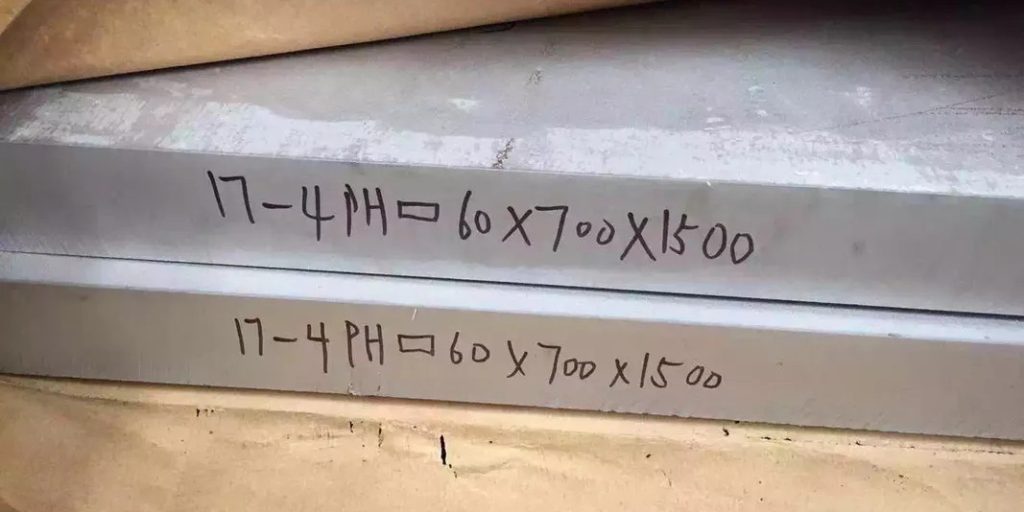
17-4 stainless steel is a precipitation-hardening stainless alloy widely used in engineering and manufacturing applications that require a balance of high strength, corrosion resistance, and dimensional stability.
Commonly specified for critical components across aerospace, medical, energy, and industrial sectors, this material is known for its versatility under different processing and heat treatment conditions.
Understanding how 17-4 PH stainless steel is defined, how its properties are developed, and where it performs best provides a solid foundation for selecting it in demanding design and production environments.
What Is 17-4 Stainless Steel?
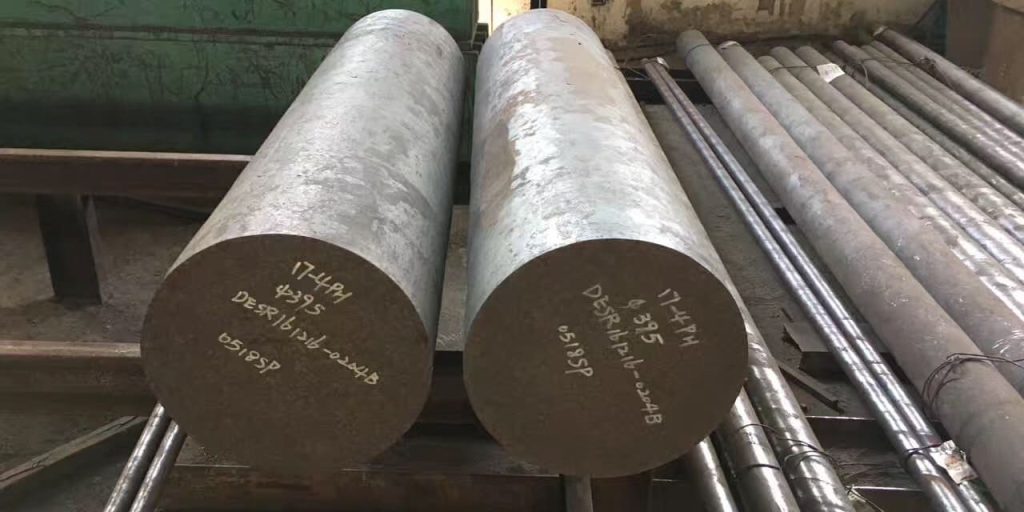
17-4 stainless steel, also known as 17-4 PH stainless steel, is a precipitation-hardening martensitic stainless steel designed to provide a strong balance of high strength, corrosion resistance, and dimensional stability. Unlike austenitic grades such as 304 or 316, 17-4 PH stainless steel can be significantly strengthened through heat treatment, allowing its mechanical properties to be adjusted to meet specific engineering and application requirements.
Metallurgically, 17-4 PH stainless steel belongs to the martensitic stainless steel family and gains its strength through a precipitation-hardening mechanism. After solution treatment and aging, fine precipitates form within the martensitic matrix, improving strength and hardness while maintaining useful corrosion resistance. This combination makes 17-4 stainless steel suitable for components that must withstand high loads, moderate temperatures, and corrosive environments.
Chemical Composition of 17-4 Stainless Steel
The performance of 17-4 PH stainless steel is largely defined by its chemical composition, which includes chromium for corrosion resistance, nickel for toughness, and copper and niobium for precipitation hardening. The chemical composition is shown below.
| Element | Content (wt%) |
| Chromium (Cr) | 15.0 – 17.5 |
| Nickel (Ni) | 3.0 – 5.0 |
| Copper (Cu) | 3.0 – 5.0 |
| Niobium + Tantalum (Nb + Ta) | 0.15 – 0.45 |
| Carbon (C) | ≤ 0.07 |
| Manganese (Mn) | ≤ 1.00 |
| Silicon (Si) | ≤ 1.00 |
| Phosphorus (P) | ≤ 0.04 |
| Sulfur (S) | ≤ 0.03 |
| Iron (Fe) | Balance |
Physical Properties of 17-4 Stainless Steel
The physical properties of 17-4 stainless steel describe its inherent material characteristics that are largely independent of heat treatment. These values are important for engineering design, material selection, and thermal or dimensional calculations, especially when 17-4 PH stainless steel is used in precision or high-temperature environments. Physical properties are summarized in the table below.
| Property | Value |
| Density | 7.7 g/cm³ (0.278 lb/in³) |
| Tensile Strength, Ultimate | 1210 MPa |
| Tensile Strength, Yield | 1090 MPa |
| Melting Range | 1,400 – 1,450 °C (2,550 – 2,640 °F) |
| Modulus of Elasticity | ~200 GPa (29 × 10ⶠpsi) |
| Thermal Conductivity | ~18 W/m·K |
| Specific Heat Capacity | ~460 J/kg·K |
| Electrical Resistivity | ~0.8 µΩ·m |
| Coefficient of Thermal Expansion | ~10.8 µm/m·°C (20–100 °C) |
These physical properties provide a baseline for understanding how 17-4 stainless steel behaves under thermal and mechanical loading before considering the effects of heat treatment on its mechanical performance.
Features of 17-4 Stainless Steel
17-4 stainless steel is valued for its balanced performance across mechanical strength, corrosion resistance, manufacturability, and cost-effectiveness. These characteristics make 17-4 PH stainless steel a versatile material choice for both structural and precision components in demanding industrial environments.
Strength
17-4 PH stainless steel offers high tensile and yield strength compared to conventional austenitic stainless steels. Through precipitation hardening, its strength can be tailored over a wide range, allowing it to meet demanding load-bearing requirements while maintaining dimensional stability. This makes it well-suited for aerospace, energy, and mechanical components subjected to repeated or sustained stress.
Hardness
The hardness of 17-4 stainless steel is directly influenced by its heat treatment condition. Aging treatments such as H900 result in high hardness and wear resistance, while higher aging temperatures reduce hardness in favor of improved toughness. This tunability allows designers to balance surface durability with resistance to cracking or impact damage.
Machinability
In the solution-annealed condition, 17-4 PH stainless steel exhibits relatively good machinability compared to many high-strength stainless steels. However, machinability decreases significantly after aging due to increased hardness. For this reason, most machining operations are performed prior to final heat treatment, particularly for tight-tolerance or complex geometries.
Corrosion Resistance
17-4 stainless steel provides corrosion resistance comparable to grades such as 304 in many environments, particularly in atmospheric, freshwater, and mildly corrosive conditions. While it does not match the performance of 316 stainless steel in highly aggressive or chloride-rich environments, it offers a strong balance between corrosion resistance and mechanical strength.
Cost
From a cost perspective, 17-4 PH stainless steel is generally more expensive than standard austenitic grades but more economical than many nickel-based or specialty alloys offering similar strength levels. Its ability to reduce part size, weight, or secondary processing often offsets the higher material cost, contributing to favorable overall manufacturing economics.
Processing 17-4 Stainless Steel
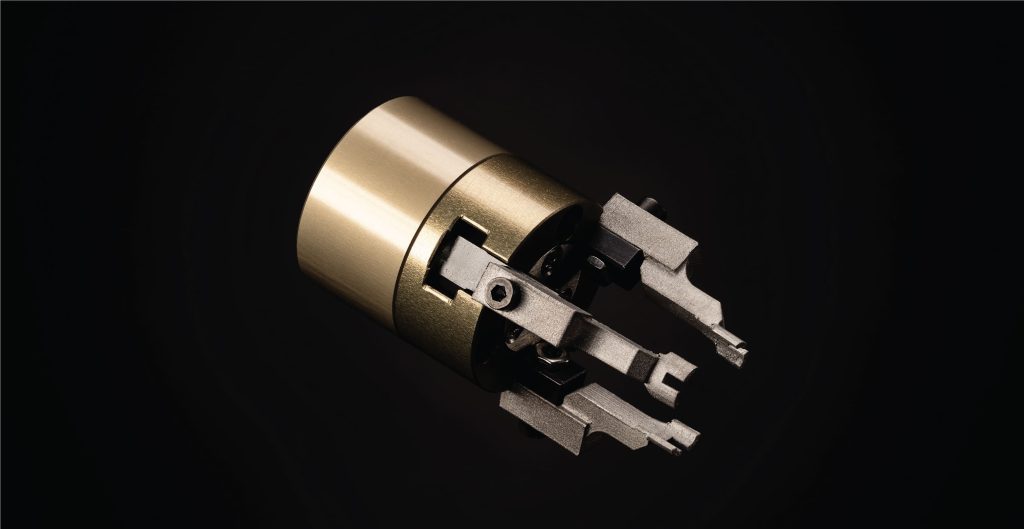
17-4 stainless steel is widely used in manufacturing due to its ability to be processed using multiple fabrication methods while maintaining predictable mechanical performance. Processing is typically optimized by selecting the appropriate manufacturing route and performing final heat treatment after shaping to achieve the desired material properties.
CNC Machining
17-4 PH stainless steel is commonly machined in the solution-annealed condition, where hardness is lower and tool wear is reduced. Standard CNC milling, CNC drilling, and tapping processes can be applied, although cutting parameters should account for its higher strength compared to austenitic stainless steels. Final aging is usually performed after CNC machining to achieve the target mechanical properties.
Turning
Turning operations on 17-4 stainless steel are frequently used for shafts, pins, and rotational components. In the annealed state, the material produces stable chips and allows good surface finishes with appropriate tooling. As with machining, post-turning heat treatment is recommended to avoid excessive tool wear and maintain dimensional accuracy.
Heat Treatment (Solution and Aging)
Although detailed heat treatment is discussed separately, solution treatment and aging are integral parts of processing. Solution treatment dissolves alloying elements into the matrix, while aging forms strengthening precipitates. These steps define the final strength, hardness, and toughness of 17-4 PH stainless steel components.
Additive Manufacturing (3D Printing)
17-4 stainless steel is well-suited for metal 3D Printing processes such as selective laser melting (SLM) and direct metal laser sintering (DMLS). 3D printing enables the production of complex geometries and internal features that are difficult to achieve through conventional methods. Post-print heat treatment is essential to achieve consistent mechanical properties and relieve residual stresses.
Welding and Fabrication
17-4 PH stainless steel can be welded using common fusion welding techniques, but careful control is required to prevent cracking and property degradation. Welded components typically require post-weld heat treatment to restore strength and corrosion resistance. In applications requiring high reliability, welding parameters and filler material selection are critical.
Get an instant quote from Xmake by uploading your design file today, and enjoy fast, reliable delivery with our expert manufacturing services.
Start a QuoteHeat Treatment of 17-4 PH Stainless Steel
Heat treatment is the key process that defines the final mechanical performance of 17-4 PH stainless steel. By controlling solution treatment and aging conditions, engineers can precisely adjust strength, hardness, and toughness to suit specific application requirements.
Solution Treatment
17-4 stainless steel is first solution treated at high temperature to dissolve alloying elements into the matrix and produce a uniform structure. This step prepares the material for precipitation hardening and improves machinability before final aging.
Aging (Precipitation Hardening)
After solution treatment, the alloy is aged at controlled temperatures to form fine precipitates that strengthen the material. Common aging conditions include H900, H1025, and H1150, with lower aging temperatures providing higher strength and hardness, and higher temperatures offering improved toughness and stress corrosion resistance.
Effect of Heat Treatment on Properties
The choice of aging condition directly affects mechanical performance. H900 delivers maximum strength and hardness, while H1150 provides better ductility and resistance to cracking. This flexibility allows 17-4 PH stainless steel to be tailored for a wide range of structural and precision applications.
17-4 Stainless Steel vs Other Stainless Steels
17-4 Stainless Steel vs 304
Compared to 304 stainless steel, 17-4 PH stainless steel offers significantly higher strength and hardness, particularly after heat treatment. However, 304 provides superior formability and weldability and is often preferred for applications requiring extensive forming or deep drawing. While 17-4 excels in load-bearing and structural roles, 304 remains a more economical choice for general corrosion-resistant applications.
17-4 Stainless Steel vs 316
17-4 stainless steel delivers much higher mechanical strength than 316, making it suitable for high-stress components. In contrast, 316 stainless steel offers better resistance to chlorides and aggressive corrosive environments due to its molybdenum content. As a result, 316 is often selected for marine or chemical exposure, while 17-4 is favored where strength and dimensional stability are primary concerns.
17-4 Stainless Steel vs 410
Both 17-4 and 410 are martensitic stainless steels, but 17-4 PH stainless steel provides a superior balance of strength and corrosion resistance. While 410 can achieve high hardness through heat treatment, it generally exhibits lower corrosion resistance and reduced toughness. 17-4 is therefore preferred for applications requiring higher reliability and longer service life.
17-4 Stainless Steel vs 15 5 PH
15-5 PH stainless steel is closely related to 17-4 and offers similar strength and corrosion resistance. However, 15-5 PH typically provides improved transverse toughness and more uniform properties in thick sections. 17-4 remains more widely used due to its broader availability and proven performance, while 15-5 is often chosen for aerospace applications with stricter toughness requirements.
Applications of 17-4 Stainless Steel
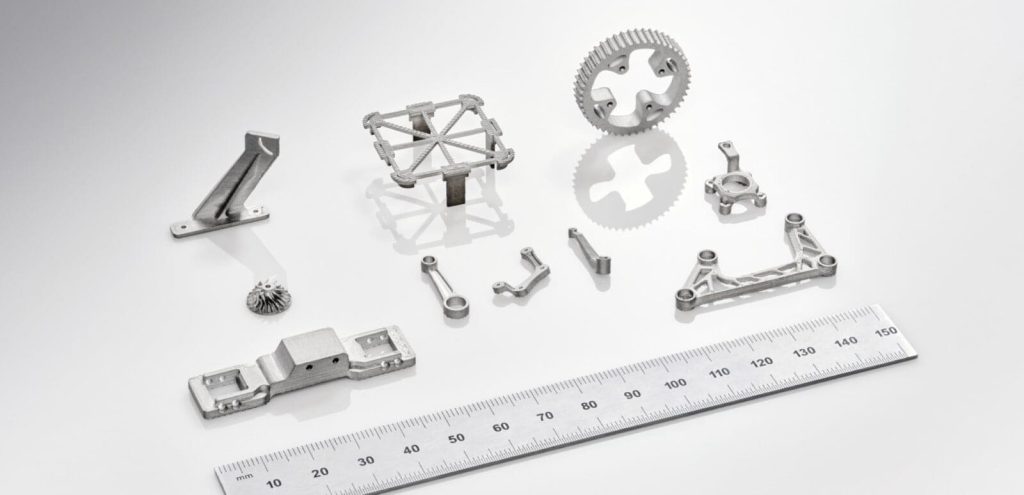
17-4 stainless steel is commonly selected for parts that require high strength, good corrosion resistance, and reliable dimensional stability after heat treatment. Its versatility allows it to be used across a wide range of precision and structural components, including the following:
- Fasteners – Nuts and Bolts, screws, and studs requiring high strength and corrosion resistance
- Shafts – Load-bearing or rotational shafts with tight dimensional tolerances
- Gears – Precision gears demanding strength, wear resistance, and stability
- Valves and Valve Components – Seats, stems, and bodies exposed to pressure and corrosion
- Pump Components – Impellers, housings, and fittings used in industrial fluid systems
- Aerospace Parts – Brackets, fittings, and supports requiring high strength-to-weight ratios
- Medical Components – Instrument parts requiring strength and corrosion resistance
- Custom CNC-Machined Parts – Complex or high-precision components tailored to specific applications
Conclusion
17-4 stainless steel offers a unique balance of high strength, corrosion resistance, and processing flexibility that sets it apart from many conventional stainless steels. Through controlled heat treatment, 17-4 PH stainless steel can be tailored to meet a wide range of mechanical and performance requirements, making it a reliable choice for demanding engineering and manufacturing applications. Understanding its properties, processing methods, and comparative performance enables more informed material selection and optimized part design.
Xmake provides one-stop custom manufacturing services, allowing users to upload design files and receive instant online quotes for CNC machining, 3D printing, and related processes. Get your parts today!