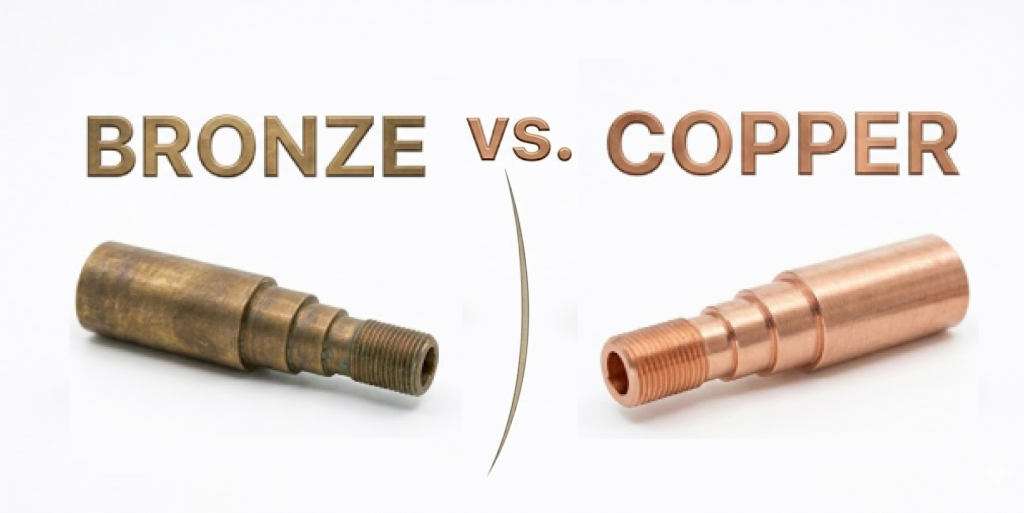
Copper and bronze are widely used across electrical, marine, construction, and industrial applications. Pure copper offers excellent electrical and thermal conductivity, making it ideal for heat dissipation and power transmission. Bronze, with its superior strength and corrosion resistance, is the go-to choice for marine hardware and heavy-duty mechanical components.In this guide, We will analyze the key differences between copper and bronze, compare their performance and machinability, and assist you in selecting the right material for your project.
Bronze vs Copper: Quick Reference
| Feature | Copper | Bronze |
|---|---|---|
|
Composition |
>99.9% Cu (Elemental) |
Copper + Tin (Alloy) |
|
Electrical Conductivity |
Best (100% IACS) |
Low (7% – 15% IACS) |
|
Thermal Conductivity |
Excellent |
Moderate |
|
Hardness |
Soft |
High |
|
Machinability |
Low |
Moderate to High |
|
Corrosion Resistance |
High (Atmospheric) |
Superior (Marine/Saltwater) |
|
Wear Resistance |
Poor |
Excellent |
|
Common Grades |
C110, C101 |
C932, C954 |
|
Typical Applications |
Busbars, Heat Sinks, Wiring |
Bearings, Gears, Marine Valves |
What Is Bronze?
Bronze is a functional alloy primarily composed of copper and tin, often supplemented with elements like aluminum, silicon, or manganese to achieve specific mechanical profiles. While pure copper is prized for its conductivity, bronze is the engineering choice when a project demands structural integrity and wear resistance. Its primary characteristics include high hardness, excellent fatigue strength, and superior corrosion resistance—particularly in saltwater environments.
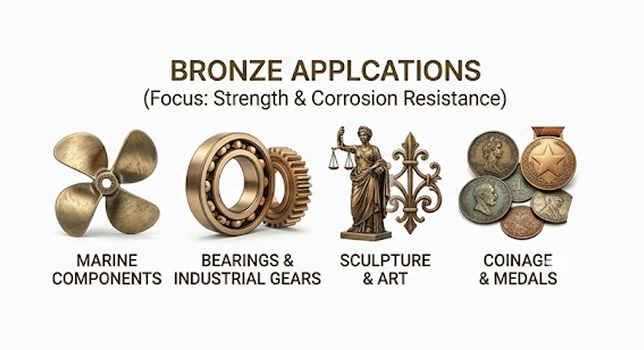
Bronze Application
Bronze is widely used in marine hardware, bearings, bushings, gears, and load-bearing components due to its excellent wear resistance, corrosion resistance, and ability to perform reliably in harsh environments.
Common Bronze Grades:
C955 (Aluminum Bronze): High strength, excellent wear resistance, and superior corrosion resistance, particularly in marine and high-temperature environments. Commonly used in heavy-duty bearings, landing gear components, pump impellers, and marine propeller shafts.
C172 (Beryllium Copper): Exceptional strength and hardness among copper alloys, combined with good electrical conductivity and non-sparking properties. Widely used in aerospace springs, precision electronic connectors, mold tooling, and safety tools for explosive environments.
What Is Copper?
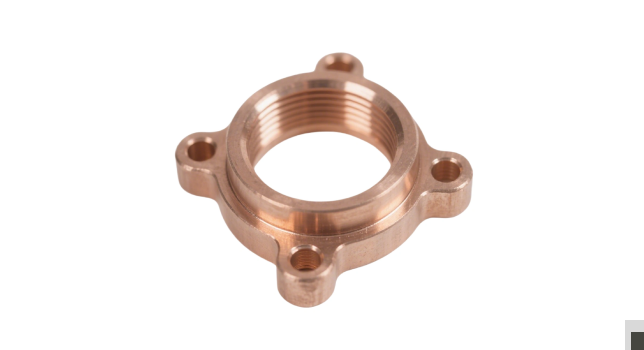
Pure copper is an elemental non-ferrous metal, with excellent electrical and thermal conductivity. Unlike its alloys, pure copper (specifically the Oxygen-Free grades) maintains a high level of purity to ensure maximum efficiency in energy transfer.
Notes: In technical specifications, “Copper” specifically refers to pure copper (elemental Cu), whereas “Brass” or “Bronze” are copper-based alloys mixed with zinc or tin respectively.
Copper Application:

Copper’s exceptional electrical and thermal conductivity makes it the preferred material for busbars, heat sinks, and precision electrical connectors. Its high ductility also allows significant deformation without cracking, making it well-suited for CNC machining and sheet metal fabrication.
These properties drive copper’s use across a wide range of industries, including renewable energy (solar cell foils, EV motors), advanced manufacturing (aerospace components, robotic joints), and AI infrastructure (liquid cooling systems for data centers).
Common Copper Grades:
C110 (ETP): Electrolytic Tough Pitch grade featuring high conductivity and excellent formability. Widely used in general electrical components, busbars, and architectural parts.
C101 (OFE): Oxygen-Free Electronic grade with resistance to hydrogen embrittlement. Suitable for high-vacuum electronics, semiconductors, and precision welding applications.
Bronze vs. Copper: Key Differences
Choosing between copper and bronze affects everything from part performance to machining costs. Below, we break down their key differences from multiple perspectives.
Composition
- Copper: An elemental metal (Cu) with purity typically exceeding 99.9%.
- Bronze: Bronze is a copper-based alloy primarily containing tin (Sn), often along with aluminum, manganese, or silicon. By varying the alloying elements, its mechanical properties, corrosion resistance, and machinability can be tailored to suit specific applications.
Mechanical Properties: Hardness & Strength
- Hardness: Bronze is significantly harder than pure copper. While copper is relatively soft (Mohs hardness of ~3.0), bronze alloys like Aluminum Bronze can reach much higher levels, allowing them to withstand heavy structural loads.
- Durability: Bronze possesses higher tensile strength and superior fatigue resistance.
Note: If your component is a load-bearing part or subject to constant friction (like a bushing), bronze is mandatory.
Electrical & Thermal Conductivity
- Copper: Pure copper offers the highest electrical and thermal conductivity of all engineering metals, with a conductivity rating of up to 100% IACS.
- Bronze: Conductivity is much lower, typically ranging from 7% to 15% of pure copper.
Decision Logic: For electrical contacts, busbars, or heat sinks, pure copper is the only viable choice despite its machining challenges.
Corrosion Resistance
- Copper: Excellent in atmospheric conditions, forming a protective green patina (verdigris) over time.However, it is less resistant to saltwater and acidic environments.
- Bronze: Excels in marine and high-salinity environments, making it an industry standard for shipbuilding and underwater equipment.
Machinability
- Copper: Challenging. Its extreme ductility causes the material to “flow” or “smear” during cutting, leading to long, stringy chips that can clog tools.
- Bronze: The alloying elements make the material more brittle, resulting in clean, broken chips. This allows for faster feeds and better surface finishes.
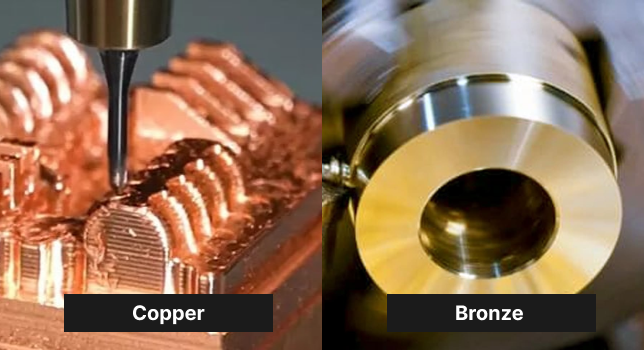
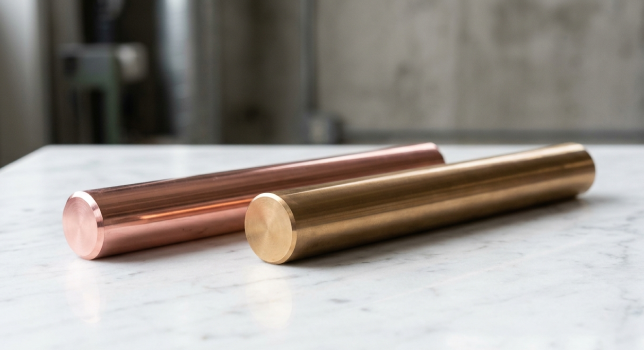
Aesthetics & Color
Copper: Distinctive pinkish-red hue with a warm, bright metallic luster when polished.
Bronze: Ranges from golden-brown to dull gold. It develops a deeper, more “antique” patina that many designers prefer for architectural elements.
Bronze vs Copper: Cost Comparison
Material cost
Bronze typically has a higher base material cost than pure copper due to its alloy composition. Market fluctuations for tin (a key component in traditional bronze) often drive bronze prices 15-30% higher than standard copper grades like C110. Copper, as a pure metal with established global supply chains, generally offers more stable and lower raw material costs, especially for high-volume applications.
Machining Costs
Copper’s high ductility and machinability reduce processing expenses, making it ideal for CNC machining, stamping, and bending with minimal tool wear. Bronze, while workable, requires specialized tooling and slower machining speeds due to its higher hardness and wear resistance, increasing labor and equipment costs. For complex geometries or precision parts, bronze may incur 20-40% higher processing fees compared to copper. However, bronze’s durability can lower long-term maintenance costs in wear-intensive applications like bearings or marine hardware.
Bronze vs. Copper: How to Choose
1.Electrical & Thermal Requirements
If your component’s primary function is to conduct electricity or dissipate heat, pure copper is the good choice. Typical applications include CPU heat sinks, high-power busbars, transformer windings, and precision electrical connectors.
2.Structural Strength & Wear Resistance
If the part must withstand mechanical stress, endure constant friction, or maintain structural rigidity under load, Bronze is the superior engineering choice.
2.Operating Environment & Corrosion Resistance
The surrounding medium directly dictates the lifecycle of your component.
Select Copper for: Controlled indoor environments or standard industrial applications where thermal transfer is the priority.
Select Bronze for: Marine engineering, naval hardware, or outdoor facilities exposed to heavy salt spray.
Other Copper Alloys & Their Relationships
While copper and bronze are foundational, the broader family of copper alloys includes Brass and Cupronickel, each offering distinct advantages for specific manufacturing environments.
Brass: An alloy of copper and zinc. Brass is the “machining champion” of the copper family. It is more malleable than bronze and has a bright, gold-like appearance. It is widely used for musical instruments, plumbing fixtures, and low-friction CNC components like gears and locks.
Cupronickel: An alloy of copper and nickel. This material is engineered for extreme environments. It is silver in color and offers the highest resistance to seawater corrosion and biofouling among all copper alloys, making it essential for desalination plants and marine heat exchangers.
Whether your project demands the unparalleled conductivity of Pure Copper or the rugged wear resistance of Bronze, the success of your component hinges on two factors: selecting the correct grade and executing a flawless manufacturing process. While copper offers the best thermal and electrical performance, its ductility requires advanced machining strategies. Bronze, conversely, provides structural longevity but demands precision tooling to handle its abrasive nature.
Xmake provides a transparent, factory-direct solution. We don’t just quote parts; we evaluate the chemistry, the tolerances, and the end-use environment to ensure the metal you select performs exactly as intended. Upload your CAD files for real-time pricing.
1. Is bronze stronger than copper?
Yes. Bronze is significantly harder and stronger than pure copper due to the addition of tin and other alloying elements. However, this added strength comes at the cost of reduced electrical and thermal conductivity.
2. Is bronze made from copper?
Yes, bronze is a copper-based alloy. It is made by combining copper with tin as the primary alloying element, typically in a ratio of 88% copper to 12% tin. Other variations may include aluminum, silicon, or manganese in place of or alongside tin, each producing a different type of bronze with distinct properties.
3. How can you tell the difference between bronze and copper?
The easiest way is by color. Pure copper has a distinctive reddish-pink tone, while bronze appears more golden or yellowish-brown.
4. What is the difference between bronze, brass, and copper?
Copper is a pure metal. Bronze and brass are both copper alloys, but with different compositions: bronze is copper alloyed primarily with tin, while brass is copper alloyed with zinc. In terms of properties, copper offers the best conductivity, bronze provides the best corrosion resistance and strength, and brass offers the best machinability and is the most cost-effective of the three. Each suits different applications depending on the performance requirements.
5. How to tell the difference between brass and bronze?
- Color:Brass has a bright yellowish tone similar to gold, while bronze appears darker with a reddish-brown hue.
- Composition:brass is copper alloyed with zinc, whereas bronze is copper alloyed primarily with tin.
- Performance:Brass is generally easier to machine and more affordable, while bronze offers better corrosion resistance and wear resistance, especially in marine environments.
6. Does bronze rust?
No, bronze does not rust. Rust is iron oxide, and bronze contains no iron. However, bronze does oxidize over time, developing a greenish surface layer called patina. This patina actually serves as a protective barrier, slowing further corrosion and extending the material’s lifespan — which is why ancient bronze artifacts have survived thousands of years.
7. Is bronze magnetic?
No, bronze is not magnetic under normal conditions. Like pure copper, standard tin bronze shows no response to a magnet. However, some specialty bronze alloys containing nickel or iron may exhibit very slight magnetic properties.