
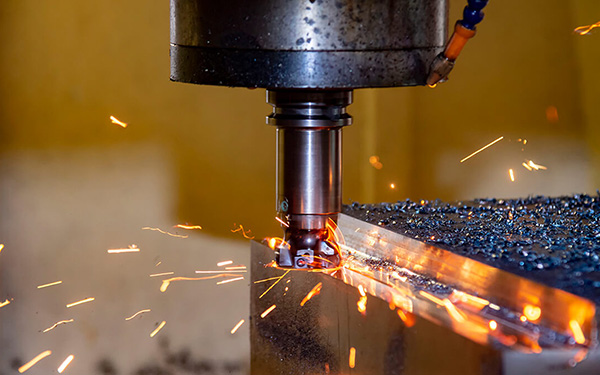
Introduction: Rough machining is the initial stage of parts manufacturing. Its main task is to quickly remove excess material with high cutting efficiency, forming the basic outline of the workpiece. As an indispensable part of modern manufacturing processes, it not only determines the overall machining efficiency but also directly affects tool life and the quality and stability of subsequent finishing. In this article, we will explain the process characteristics, application scenarios, and precautions of roughing, helping you to gain a more systematic understanding of this machining stage.
What is Roughing?
Rough machining is the first step in shaping a part.During this process, a large amount of material is removed from the workpiece at a high cutting rate to quickly form a shape and size close to the finished product. It is an indispensable stage in the overall machining process.
Key Characteristics of Roughing
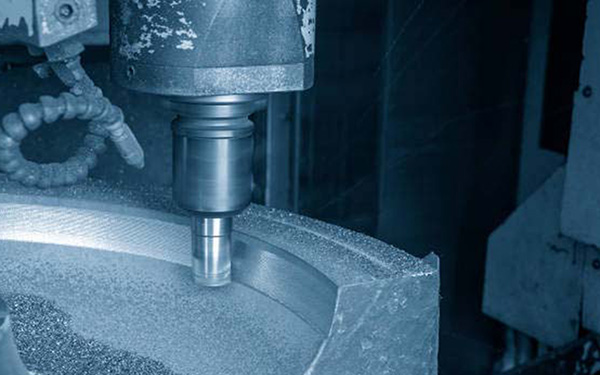
Roughing prioritizes material removal, typically adopts a large cutting depth and a high feed rate to achieve rapid part forming. However, this strategy easily leads to significant dimensional deviations and surface roughness, resulting in defects such as tool marks and burrs. Therefore, for high-precision parts, finishing is usually performed later to achieve the desired accuracy.
Furthermore, the strategy of using large cutting depths and high feed rates generates substantial cutting forces and impact loads, placing high demands on the strength, rigidity, and toughness of cutting tools. In practice, tools with high strength and wear resistance—such as large milling cutters or turning tools—are typically selected. Additionally, during machining, the cutting speed is usually kept at a relatively low level to protect the tool and minimize wear.
In simple terms, the characteristics of rough machining are:
- Rapid material removal
- Rough surface finish and low precision
- Preparatory stage for finish machining
- Utilisation of greater cutting depths and higher feed rates
When to Employ Rough Machining in CNC Processing
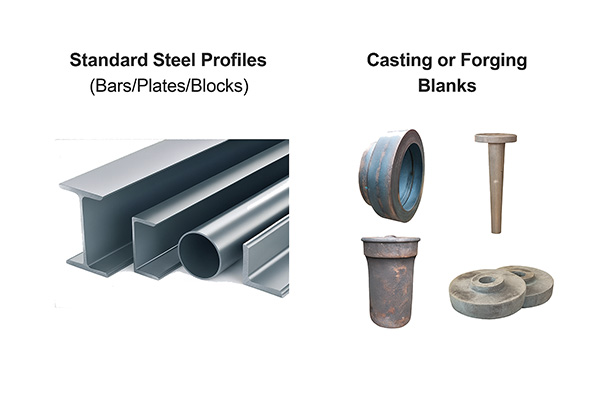
Roughing is a key process in the forming stage of a blank. Whether you are using standard profiles such as bars, plates, blocks, or cast or forged blanks, rough machining is indispensable.
For standard profiles, roughing can efficiently remove large amounts of material and quickly form part structures. It also effectively accomplishes operations such as milling cavities, turning external diameters, or drilling large holes.
For cast blanks, even though they possess a preliminary shape, defects such as gates, parting lines and scale on the surface necessitate rough machining to establish uniform reference surfaces and outer contours. For forged blanks, rough machining efficiently removes surface oxide layers while shaping them into their final form, simultaneously relieving internal stresses.
In addition to this, roughing can also be used after welding or surfacing to quickly and evenly remove uneven weld or surfacing layers from the surface of a part, resulting in a flat surface.
Overall, roughing is an essential stage in the manufacturing process of most parts. It is widely used in aerospace, automotive manufacturing, energy equipment, mould manufacturing and other fields. It is commonly used for machining aircraft structural parts, engine cases, automotive chassis parts, wheel hubs and various types of mould cavities and other key parts.
Precautions for Rough Machining
1. Leave Proper Machining Allowance
In most mechanical part production, finishing is usually carried out after rough machining to achieve optimal dimensional and geometric accuracy. Therefore, it is essential to leave an appropriate machining allowance during the roughing stage to ensure sufficient material for finishing operations.
For most metal components, the allowance is typically controlled within 0.3–1.0 mm, and the exact value should be adjusted according to the workpiece size and precision requirements.
2.Select Proper Cutting Tools and Machining Strategies
In rough machining, the cutting depth and feed rate are typically large, resulting in significantly higher loads and impacts on the cutting tools. Therefore, it is necessary to select cutting tools with high wear resistance and impact resistance, such as carbide or coated milling cutters, to ensure machining stability and tool life.
Meanwhile, the machining strategy should be adjusted flexibly, using methods such as step cutting or climb/conventional milling to distribute and balance cutting stress, thereby reducing deformation of the workpiece.
3.Reasonable Cutting Parameters
To ensure roughing efficiency, the depth of cut should be maximized within the machine tool’s power limits. Simultaneously, to balance the tool load caused by the large depth of cut, the cutting speed needs to be appropriately reduced to control wear. Based on this, the feed rate should be further optimized to achieve a balance between efficient cutting and system stability. Throughout the process, parameters need to be dynamically optimized based on material hardness, real-time operating conditions, and machine tool rigidity.
4.Employ Reliable Clamping
The large depth of cut and high feed rate during roughing generate significant cutting forces and vibrations, easily leading to workpiece deformation and fixture loosening. Therefore, reliable fixtures should be used in roughing, combined with a stable fixture solution.
5.Continuously Monitor Tool Condition
Roughing strategies cause significant tool wear. Besides selecting the right tool, it is crucial to rigorously inspect tool wear during the process. If any problematic tools are found, they should be replaced promptly to ensure consistent machining.
FAQ
1.Is finishing always required after rough machining?
Whether finishing is required after rough machining depends on the part’s dimensional accuracy, surface quality, and functional requirements. For parts with low functional and aesthetic requirements, rough machining is usually the final process. However, for high-precision parts requiring high surface finish, finishing is necessary to achieve fine tolerances and good surface quality.
2.The Difference Between Roughing and Finishing
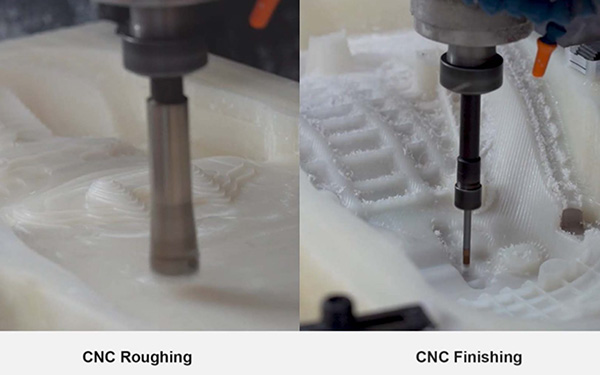
Roughing aims to efficiently remove most of the excess material from the blank, quickly machining it to near the final shape of the part. It typically employs a large depth of cut, high feed rate, and low cutting speed, but this leaves larger dimensional tolerances and a rough machined surface. Additional, High-strength, impact-resistant tools with negative rake angles are usually selected.
Finishing aims to correct the deviations left by roughing (smaller machining allowance) to achieve parts with precise dimensions and good surface quality. It typically employs a small depth of cut, low feed rate, and high cutting speed. Tools with high hardness, sharp cutting edges, and positive rake angles are usually selected.
In reality, in modern manufacturing, roughing and finishing are more complementary. Roughing lays the foundation for finishing, reserving machining allowance. Finishing uses flexible machining strategies to achieve the final accuracy and quality of the part. Through such a clear division of labour, the entire manufacturing process ensures that high-precision products can be produced economically and reliably while maintaining efficiency.
Conclusion
Rough machining is an essential stage in modern manufacturing, primarily aimed at rapidly shaping parts with a high material removal rate while maintaining structural stability.
To achieve efficient and cost-effective results, thorough preparation before machining is crucial. This includes leaving an appropriate machining allowance, selecting suitable cutting tools and clamping methods, and optimizing cutting parameters.
Xmake is a global manufacturing group providing customized manufacturing services, including 3D printing, CNC machining, sheet metal fabrication, injection molding, and vacuum casting.
We offers a wide range of machining processes, providing one-stop CNC services from rough machining and semi-finishing to finishing. We help transform your parts efficiently from raw material to finished product. Click to upload your drawings or samples to get a personalized quotation.