
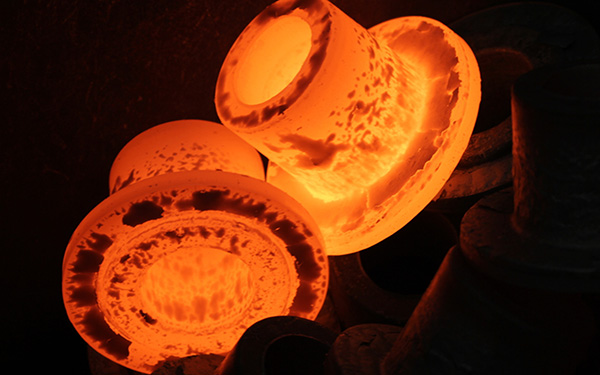
Introduction: In manufacturing, heat treatment is an important means of improving the performance and processing quality of parts. Heat treatment involves heating, soaking, and cooling metals to enhance their hardness, strength, toughness, wear resistance, and workability, thereby making the material more suitable for machining and practical applications. This article will introduce the basics of heat treatment to help you better understand its principles and common processes.
What is heat treatment
Heat treatment is a process of controlled heating, soaking,and cooling of metals.This process improves the internal microstructure of metals, enhancing properties such as hardness, wear resistance, strength, and toughness to better align with the application requirements of components.
Meanwhile, heat treatment can improve the processing performance of the metal, making it easier to process and improve the efficiency of processing.Heat treatment holds a pivotal position in manufacturing and metalworking, serving as a critical process for regulating material properties and ensuring components meet design specifications.
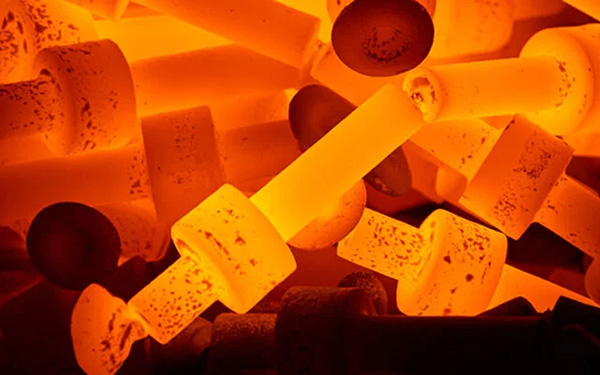
When do metal parts require heat treatment?
In metal processing, if the material properties do not meet expectations or if there are potential risks during processing, heat treatment is required to adjust the properties. Common applications include:
- When parts require higher strength, hardness, toughness, or wear resistance, heat treatment is typically used to achieve the corresponding performance improvements.
- When materials are too hard or too soft, heat treatment is usually required to adjust the hardness, thereby improving machinability and increasing machining efficiency.
- For blanks (castings, forgings) or parts after cold working, heat treatment is often needed to homogenize the microstructure, relieve stress, and adjust the hardness This process enhances machinability and ensures stable mechanical properties.
Steps of Heat Treatment
After determining when metal requires heat treatment, let us see how the process is carried out. Generally, heat treatment involves the following stages:
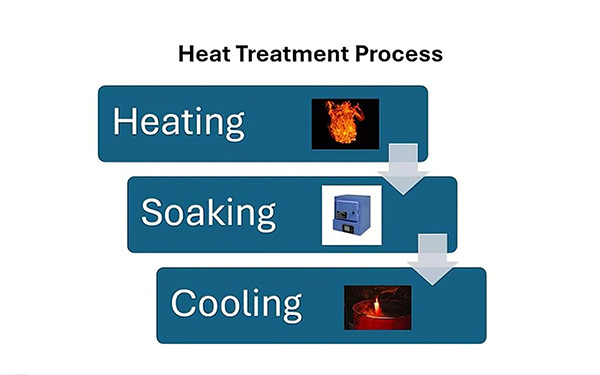
1. Heating
The metal is heated at a controlled rate to the specified temperature, enabling the microstructure to transform from the room-temperature phase into the high-temperature phase. This step is a prerequisite for the subsequent cooling phase.
The heating stage typically requires strict control over both temperature and heating rate. Generally, the heating temperature depends on the material type and the purpose of the heat treatment. The heating rate must be slow or segmented; excessive speed may cause deformation or cracking.
2. Soaking
After the heating stage reaches the target temperature, it is necessary to keep the workpiece at that temperature for a certain period of time to ensure that the workpiece is completely burned through and to obtain a uniform chemical composition and organization. The soaking time typically depends on the workpiece material, dimensions, furnace load, and type of heat treatment.
3. Cooling
Finally, the heated workpiece is cooled to room temperature at a predetermined rate and method. By controlling the cooling rate and cooling medium (water, oil, air, or furnace cooling for metals), entirely different material microstructures and properties can be achieved. For example, quenching requires rapid cooling to form high-hardness martensite; normalizing employs air cooling to obtain a refined microstructure;
Why is heat treatment important?
Heat treatment is indispensable in mechanical manufacturing because it is one of the few processes that can directly alter material properties.For most parts, the original organization of the material often fails to meet performance requirements such as strength, hardness, toughness, or stability, while heat treatment allows the material to achieve the desired properties by changing the internal structure of the metal.
For example, for parts that need to withstand large loads (such as drills, cutting tools, gears, etc.), heat treatment can be used to enhance their strength and hardness; for parts that require surface wear resistance, surface hardening treatment can be used to enhance their abrasion resistance …
Heat treatment can also effectively eliminate residual stresses generated during machining processes such as casting and forging, which can easily cause part deformation or even cracking. Through processes like stress-relief annealing, heat treatment significantly improves dimensional stability and reduces the risk of deformation.
Additionally, heat treatment can improve machinability. Materials that are either too hard or too soft are unfavorable for machining. Through annealing or normalizing, hardness can be adjusted to a range suitable for cutting, thereby enhancing machining efficiency and improving surface quality.
In summary, heat treatment is a critical process for optimizing material properties to their ideal state, enabling components to possess excellent machinability while also meeting the performance requirements for their final application.
Types of Heat Treatment
Heat treatment processes are diverse and can be broadly categorized into two main types based on their purpose and characteristics: through-hardening and surface treatment.
Overall heat treatment refers to heating, soaking, and cooling the entire workpiece to obtain uniform and stable mechanical properties throughout the section. Typical processes include annealing, normalizing, quenching, and tempering.
While the surface heat treatment only heats the surface layer or alters its composition, enabling the surface to achieve higher hardness and wear resistance while maintaining good toughness internally.
In this chapter, we will elaborate on these processes in detail to help you gain a deeper understanding of the different heat treatment techniques.
Annealing
Annealing is a heat treatment process that involves heating metal above its phase transformation temperature, soaking it at that temperature, and then cooling it slowly with the furnace. The purpose of annealing is to reduce metal hardness, eliminate internal stresses, improve machinability, and make the metal easier to cut. Materials that have undergone annealing become easier to process, less prone to cracking, and exhibit a more uniform microstructure.
Normalizing
Normalizing is a heat treatment process that involves heating metal above its phase transformation temperature, soaking it at that temperature, and then allowing it to cool naturally in air. The purpose of normalizing is to refine and homogenize the metal structure, enhance its overall mechanical properties, and improve the material’s machinability.Normalizing involves a faster cooling rate than annealing, resulting in a finer microstructure and slightly higher strength and hardness compared to the annealed condition. This process is commonly applied to cast steel, forgings, and low-carbon steel to improve internal microstructure.
Quenching
Quenching is a heat treatment process that involves heating metal above its phase transformation temperature, soaking it at that temperature, and then rapidly cooling it in a quenching medium (such as water or oil).
The purpose of quenching is to significantly enhance the hardness, strength, and wear resistance of the workpiece. It is typically applied to components requiring high strength and hardness, such as cutting tools and gears. However, since quenching renders the metal brittle, it is generally followed by tempering to reduce brittleness, improve toughness, and achieve more stable and reliable performance.
Tempering
Tempering is an essential process following quenching. It is a heat treatment technique that involves heating the metal to a temperature below its phase transformation point, soaking it at that temperature, and then cooling it. The purpose is to reduce the brittleness resulting from quenching, enhance the material’s toughness, and make its properties more stable and reliable.
Precipitation hardening
Precipitation hardening, also known as age hardening, involves heating the metal to a relatively low, controlled temperature and soaking it for an extended period. Unlike quenching, it does not rely on rapid cooling to increase hardness. Instead, fine particles gradually precipitate within the metal, blocking dislocation movement and restricting deformation, which significantly enhances the alloy’s strength. This process is used for certain types of alloys, particularly aluminum, nickel and titanium alloys. For example, the “T6” in 6061-T6 and 7075-T6 is solution treatment + artificial aging.
Surface Hardening
Surface hardening involves heating and cooling the outer layer of metal to achieve surface hardening. The purpose of this process is to achieve a combination of “hard exterior and tough interior” properties, where the surface resists wear and surface damage, while the inner layer maintains good toughness to withstand overall loads and impacts.
Surface hardening is mainly achieved by surface hardening and chemical heat treatment. The core difference between the two is whether or not the chemical composition of the surface layer is changed:
- Surface hardening: This method does not alter the surface chemical composition but involves rapidly heating the workpiece surface and then immediately cooling it, causing a martensitic transformation and forming a high-hardness structure. Common methods include induction hardening and flame hardening.
- Chemical heat treatment: This method involves infiltrating elements such as carbon and nitrogen into the metal surface to change its chemical composition, followed by appropriate heat treatment to form a high-hardness compound layer or diffusion layer. Typical processes include carburizing, nitriding, and carbonitriding.
| Heat Treatment Processes | Core Purpose | Heating Temperature | soaking method | Most Applicable Metals | Unsuitable/Poorly Effective Metals |
|---|---|---|---|---|---|
|
Annealing
|
Reduces metal hardness, eliminates internal stress, and improves machinability |
Above critical temperature |
Furnace cooling (slow cooling in the furnace) |
Steel, cast iron, some non-ferrous metals (copper, aluminum, titanium) |
Pure metals |
|
Normalizing |
Refines microstructure and adjusts hardness |
Above critical temperature |
Air cooling (cooling in still air) |
Carbon steel, alloy steel |
Aluminum, copper, magnesium (no phase transformation, poor effect) |
|
Quenching |
Significantly improves the hardness, strength, and wear resistance of the workpiece |
Above critical temperature |
Rapid cooling (water/oil/gas) |
Medium and high carbon steel, alloy steel |
Low carbon steel, most non-ferrous metals,pure metals |
|
Tempering |
Reduces quenching brittleness and eliminates internal stress |
Below critical temperature (usually 150-650°C) |
Air cooling or furnace cooling |
Quenched steel parts
|
Unquenched steel (insignificant effect) |
|
Precipitation Hardening |
Increases strength and hardness |
Solution treatment (high temperature) + aging treatment (medium-low temperature) |
Rapid cooling after solution treatment, followed by air cooling during aging. |
Aluminum alloys, stainless steel (PH), nickel-based alloys; |
ordinary carbon steel, low-alloy steel (no precipitation strengthening effect). |
|
Surface Hardening |
High surface hardness, internal toughness maintained. |
Depends on specific processes (e.g., carburizing approximately 900°C) |
Depends on specific processes (usually requires quenching). |
Steel materials, gears, shafts. |
Aluminum, copper, magnesium (cannot form a hardened layer). |
Summary
Heat treatment is an indispensable process in mechanical engineering, playing a crucial role in enhancing component performance. Based on process characteristics and treatment scope, it can be categorized into two main types: overall heat treatment and surface heat treatment. Common processes such as annealing, normalizing, quenching, and tempering are primarily designed for steel materials exhibiting austenitic phase transformation, aiming to adjust properties like hardness, strength, and toughness. For other metals, different heat treatment methods are required; for example, aluminum alloys typically undergo solution treatment and aging to enhance performance.
As outlined above, heat treatment is a crucial process for enhancing the performance of metal parts. At xmake, alongside our professional CNC machining, sheet metal fabrication, and vacuum casting services, we also provide specialized heat treatment capabilities. We tailor our heat treatment solutions to your specific material and application needs, ensuring optimal strength, hardness, and durability for your parts. If you have a related need, please feel free to contact us.
FAQ
1. Can all metals be heat-treated?
No. Only materials with corresponding phase transformation properties or age-hardening mechanisms are suitable for heat treatment. Common metals suitable for heat treatment processes are as follows:
- Carbon steel and alloy steel: Hardness and strength can be significantly improved through quenching, tempering, and quenching and tempering.
- Aluminum alloys: Unlike steel, they cannot be hardened by quenching; their properties can only be improved through annealing, solution treatment, and aging.
- Stainless steel: Austenitic stainless steel cannot be strengthened by quenching; it mainly relies on solution treatment and age hardening. Martensitic and precipitation-hardening stainless steels can have their hardness improved through heat treatment.
- Copper, magnesium, and other metals: They also cannot be significantly hardened by quenching; their strength is mainly improved through solution treatment, aging, or cold working.
2. Do metal parts always require heat treatment?
Not necessarily. Whether heat treatment is needed depends on the part’s performance requirements and material condition. If the material itself already meets the strength, hardness, toughness, and machinability requirements, then no additional heat treatment is required. Alternatively, if the part’s operating conditions are not severe, there is no need for extra heat treatment.
3. What properties of metals does heat treatment alter?
Heat treatment can significantly influence multiple properties of metals, including hardness, strength, toughness, ductility, wear resistance, and internal residual stresses. The specific adjustments to these properties are determined by the particular heat treatment method employed.
4.Can heat treatment cause part deformation?
Heat treatment may cause part deformation. During the process, metal undergoes heating, phase transformation, and cooling—all of which induce volume changes and stress variations. If temperature distribution is uneven or cooling occurs too rapidly, parts may bend, twist, or develop dimensional deviations. However, most deformations can be minimized or compensated for through proper process control.
5. Is heat treatment expensive?
The cost of heat treatment depends on factors such as the type of process, material type, and production scale. Generally, overall heat treatment processes like annealing and normalizing are relatively low-cost, while high-temperature or long-cycle processes such as carburizing, nitriding, and vacuum heat treatment tend to be more expensive. Surface hardening costs fall between these two extremes.