
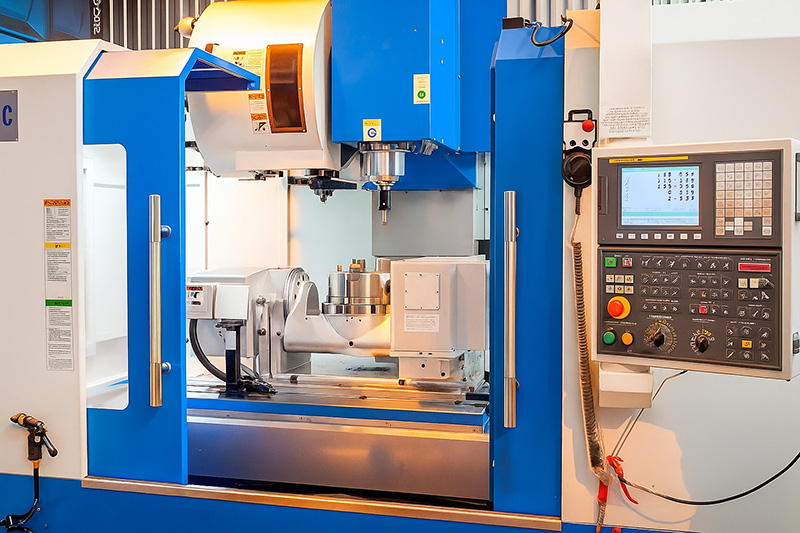
Introduction: CNC machine is an machine driven by a computer numerical control system (CNC). It typically consists of a CNC system, a servo drive system, a tooling system, a spindle system, a feed system, and various auxiliary devices. These components work together to precisely control the relative movement of the tool and the workpiece, completing various machining operations such as cutting, drilling, milling, and turning. It is an indispensable core piece of equipment in modern machining. This article will introduce the principal components of CNC machine and their respective functions.
Components of CNC Machine
CNC machine consist of multiple systems and structural units, which work closely together to complete the machining of parts. The following will introduce some key components:
Machine Bed
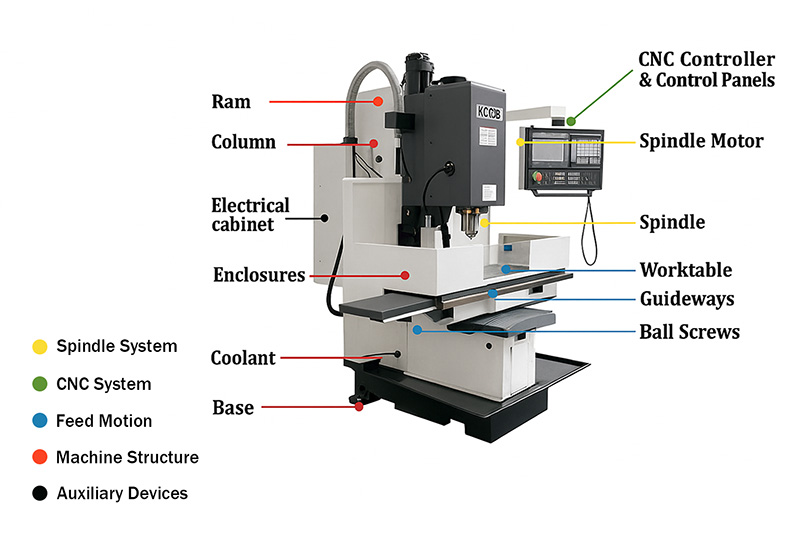
Machine bed is the basic part of cnc machine, mainly used to support core components such as the spindle system, feed system, and worktable. The bed is typically made of high-strength cast iron or steel, which ensures the stability of the entire machine. Different types of cnc machine have different bed structures. For example, the bed of a CNC lathe is usually long and narrow, while that of a CNC milling machine is typically T-shaped or box-type, and the bed of a gantry machining center is huge and has a double-guideway structure.
The spindle system
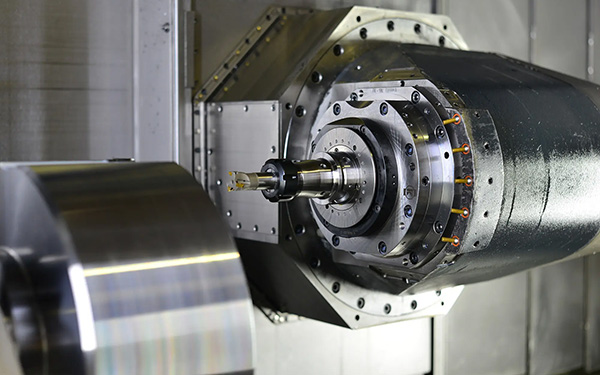
The spindle system is the power core of a CNC machine, responsible for driving the rotation of the tool or workpiece. It typically consists of the spindle body, bearing assembly, spindle motor, transmission mechanism, and cooling and lubrication system. During machining, the CNC system controls the spindle’s start/stop, speed, and direction of rotation according to program instructions, ensuring stable cutting power for the tool.
Based on the drive method, spindle systems can be divided into three categories: belt-driven spindles, gear-driven spindles, and electric spindles. Among them, electric spindles integrate the motor and spindle into one unit, featuring a compact structure, low noise, and fast response, and are widely used in high-speed, high-precision machining centers.
Tool Device
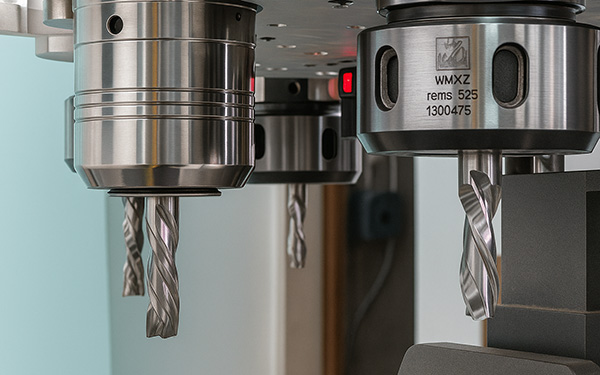
A tool device used to install, fix, and adjust the position and orientation of cutting tools, and is a key component for machining. For conventional lathes, the tool device mainly consists of a tool post, tool holder, and tool clamping mechanism. The operator manually adjusts the tool position to complete roughing or finishing. For CNC lathes or machining centers, the tool device has further evolved into an automated system consisting of a tool turret, tool magazine, and automatic tool changer (ATC), which can automatically change tools according to program instructions to achieve continuous multi-operation machining.
Worktable
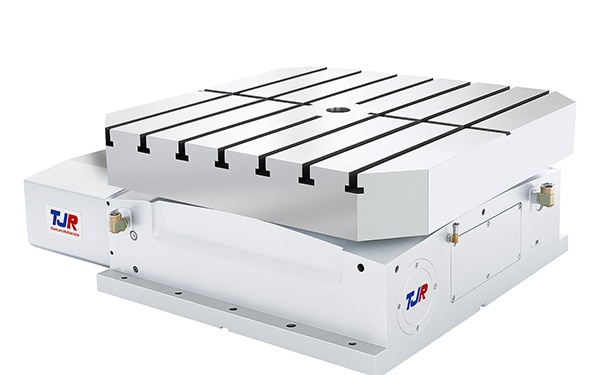
The worktable is the moving platform on a CNC machine tool that supports, positions, and fixes the workpiece. During machining, the tool or spindle moves relative to the worktable to achieve cutting operations on the workpiece.
Different types of machine tools have different worktable structures: vertical machining centers often use horizontally moving tables, horizontal machining centers are often equipped with rotatable worktables for multi-face machining, while five-axis machine tools add A/B rotary axes to achieve machining of complex curved surfaces. High-end equipment is also equipped with automatic table changing systems, which can seamlessly switch between machining and clamping, significantly improving production efficiency.
Overall, the worktable is not only the connection interface between the machine tool and the workpiece, but also a key foundation for ensuring cutting stability and machining accuracy.
Feed System
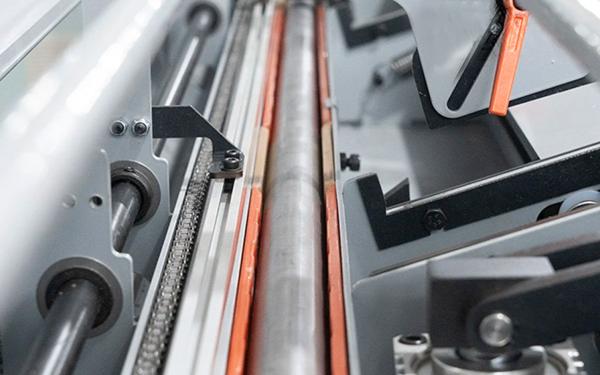
The feed system, based on motion commands issued by the CNC system, drives various moving parts of the machine tool (such as the worktable, spindle box, tool post, etc.) to move precisely along a set direction and speed, creating accurate relative displacement between the tool and the workpiece, thereby completing the cutting process. It typically consists of components such as servo motors, linear guides, ball screws, and slides.
The structure of the feed system varies depending on the type of CNC equipment: in vertical machining centers, the worktable usually moves along the X and Y axes, while the spindle feeds along the Z axis; horizontal or five-axis machine tools may add rotary axes (such as A, B, and C axes) to achieve multi-angle machining.
CNC Unit
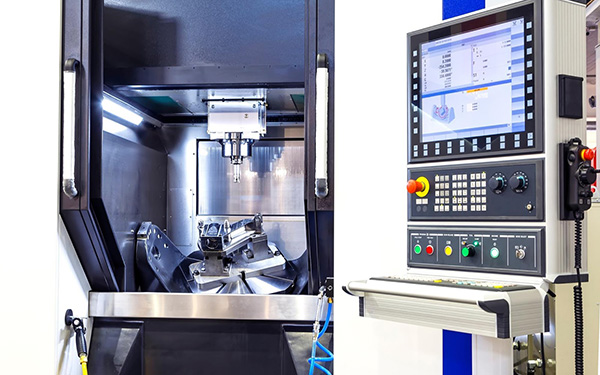
The CNC unit is the control core of a CNC machine tool. It is primarily responsible for reading the machining program, calculating the tool path, and controlling the movement of each axis and the rotation of the spindle, thereby achieving automated cutting. It typically consists of a central processing unit (CPU), memory, input/output (I/O) interfaces, position control modules, a display, and a control panel. These modules work closely together to achieve precise machine tool movement. The operating mechanism of the CNC unit is as follows:
Command Input and Parsing: The operator inputs the machining program through the control panel. The CPU reads and parses the G/M code, generating motion commands for the coordinate axes (such as target position and speed).
Command Execution and Drive: The servo control module receives the commands and transmits them to the servo drive unit, ultimately driving the motors of each coordinate axis to achieve precise movement.
Closed-Loop Feedback and Correction: During the process, detection elements (encoders and linear scales) provide real-time feedback on the actual position. The control system compares and dynamically corrects this feedback to achieve high-precision closed-loop machining.
Servo Drive System
The servo drive system is a key control unit in CNC machine that drives the precise movement of each coordinate axis and the spindle, connecting the CNC system and the actuators. It consists of servo drivers, servo motors, and feedback devices (such as encoders and linear scales).
During operation, the CNC system transmits motion commands to the servo drivers. The drivers control the speed, position, and torque of the servo motors according to these commands, enabling the moving parts of the machine tool (such as the worktable, spindle box, and tool post) to achieve the predetermined movements. Simultaneously, the feedback devices monitor the actual position and speed of the motors or axes in real time and return the signals to the controller for comparison and correction, forming a closed-loop control system that ensures motion accuracy and response speed.
Auxiliary Devices
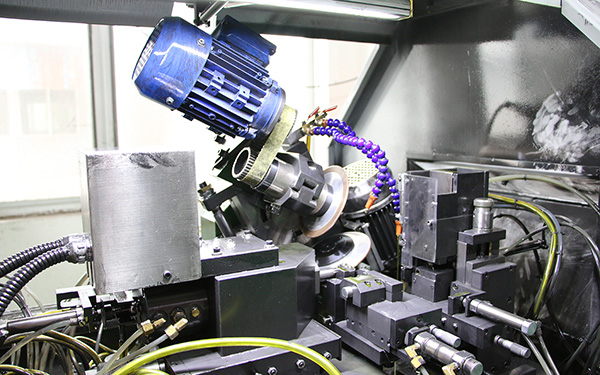
Auxiliary devices, including cooling systems, chip removal systems, and pneumatic/hydraulic systems, constitute important auxiliary components of CNC machine tools. The cooling system reduces the temperature of the tool and workpiece during cutting, preventing thermal deformation and extending tool life. The chip removal system promptly removes chips generated during machining, keeping the machining area clean and preventing any impact on accuracy. The pneumatic and hydraulic systems provide power support for actions such as chuck clamping and tool changing, enabling rapid and stable execution. Although these systems do not directly participate in cutting, they play a crucial supporting role in the stability, reliability, and automation level of the machine tool.
In summary
The components of a machine tool may vary depending on its type. However, regardless of the type, all CNC machine tools possess core components such as a CNC system, servo drive system, spindle system, and feed system. These systems collectively form the foundation for the machine tool’s control, transmission, and execution, and are key to achieving automated, high-precision machining.
Xmake is a global manufacturing group equipped with advanced CNC machining centers, providing customized CNC machining services to clients. Our metal and plastic parts are renowned for their high cost-performance ratio, high quality, and high precision. Contact us for a quote.